A responsive hospitality website connecting rural accommodation, wellness experiences and destination content with a clear reservation journey through GuestCentric.
RoleWebsite Development · UX/UI Implementation · Technical Management
CategoryHospitality · Rural Tourism · Wellness
PlatformWordPress · Divi · GuestCentric · Google Maps
EngagementDevelopment, deployment and monthly maintenance
01 · Project overview
A digital hospitality experience designed to communicate place, comfort and availability with clarity.
Sesmarias Turismo Rural & SPA needed a professional digital presence capable of presenting accommodation, wellness facilities, activities and its rural Alentejo setting while guiding visitors naturally towards booking.
The project translated a content-rich hospitality offer into a responsive website where rooms, atmosphere, experiences, promotions, location and reservations could be explored without unnecessary friction. The experience was designed to balance emotional destination storytelling with practical decision-making information.
WordPress and Divi provided the foundation for a maintainable content system, while GuestCentric handled availability and reservation transactions. Google Maps, visible contact information and clear booking calls to action reinforced the path from inspiration to action.
Experience objectiveInspire and convert
The interface communicates the atmosphere of the property while keeping availability and reservation pathways visible.
Content scopeRooms, spa, activities and offers
Different hospitality content types were organised through repeatable structures and predictable navigation.
Operational scopeLaunch and continued management
The engagement included deployment, domain and email configuration, hosting administration and monthly maintenance.
02 · Experience challenge
The platform had to sell an atmosphere while answering the practical questions that precede a reservation.
Hospitality users rarely make decisions from one type of information. They evaluate imagery, room details, activities, wellness facilities, location, availability and trust signals together. The website therefore needed to create a coherent relationship between emotional content and functional booking information.
The challenge was to make a broad offer feel calm and intuitive. Navigation had to support users who arrived with different intentions: comparing rooms, discovering the rural environment, checking promotional packages, understanding the spa experience or moving directly towards a booking.
01
Destination storytelling
Large-format imagery and concise editorial sections introduce the property without overwhelming the user.
02
Accommodation comparison
Room and suite content follows consistent structures so visitors can identify the most relevant option quickly.
03
Booking continuity
Reservation calls to action connect the informational website with GuestCentric at the appropriate decision stage.
04
Cross-device usability
The content hierarchy adapts across desktop, tablet and mobile while preserving key contact and booking actions.
03 · Role and workflow
Development decisions connected interface structure, platform configuration and long-term operational needs.
I participated as the website developer, managing the technical implementation from environment preparation and page construction through deployment and continued maintenance. The work included WordPress and Divi configuration, responsive implementation, content integration, external services, domain and email administration, quality assurance and ongoing updates.
The workflow treated real hospitality content as part of the design process. Page structures were validated against room descriptions, activity information, promotions, location details and reservation pathways so that the final system remained practical for both users and future content management.
Structure
Content inventory, navigation, page relationships and wireframe architecture.
Implementation
WordPress, Divi, responsive templates, media integration and interaction refinement.
Operations
Deployment, infrastructure configuration, testing and monthly platform continuity.
04 · Information architecture
Navigation was organised around the questions guests ask before choosing a rural stay.
The principal navigation connects the home page with accommodation, atmosphere, promotions, activities, video, contact, location and reservations. This structure separates inspiration from detailed evaluation while keeping the booking destination consistently accessible.
Content pages use progressive disclosure: overview information appears first, followed by more detailed descriptions, supporting imagery and calls to action. The approach allows visitors to scan quickly before choosing how deeply to explore each subject.
Architecture principle
For hospitality websites, the booking button should not replace useful content. The interface must first build confidence through clear accommodation, experience, location and service information, then make the transactional next step effortless.
05 · Wireframes and responsive UI
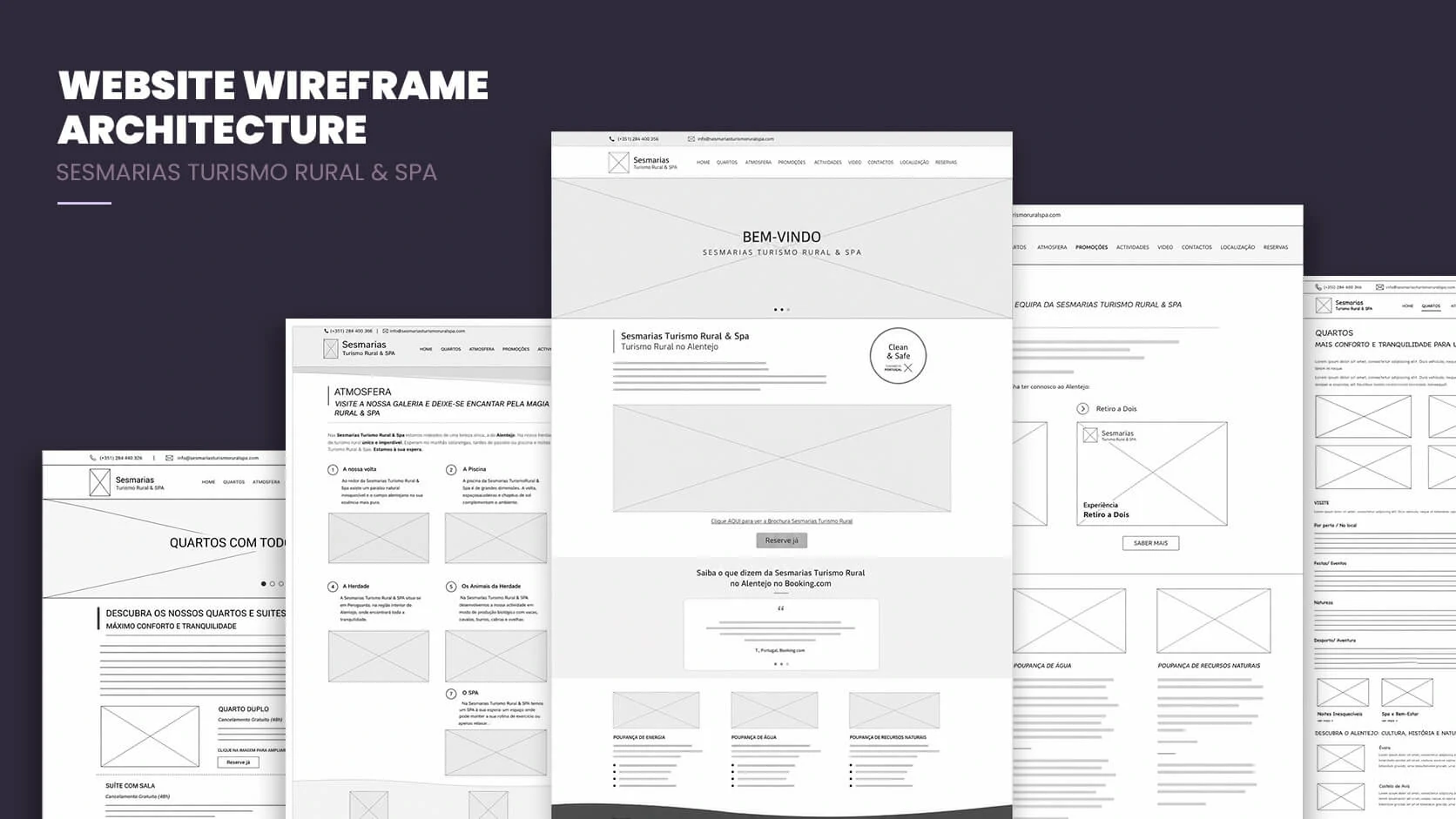
Wireframes established hierarchy, reusable modules and reservation-oriented navigation before visual implementation.
The wireframe stage mapped the relationship between hero areas, room summaries, atmosphere sections, promotions, activity content, trust elements and calls to action. Reusable modules reduced interface inconsistency and supported adaptation across different page types.
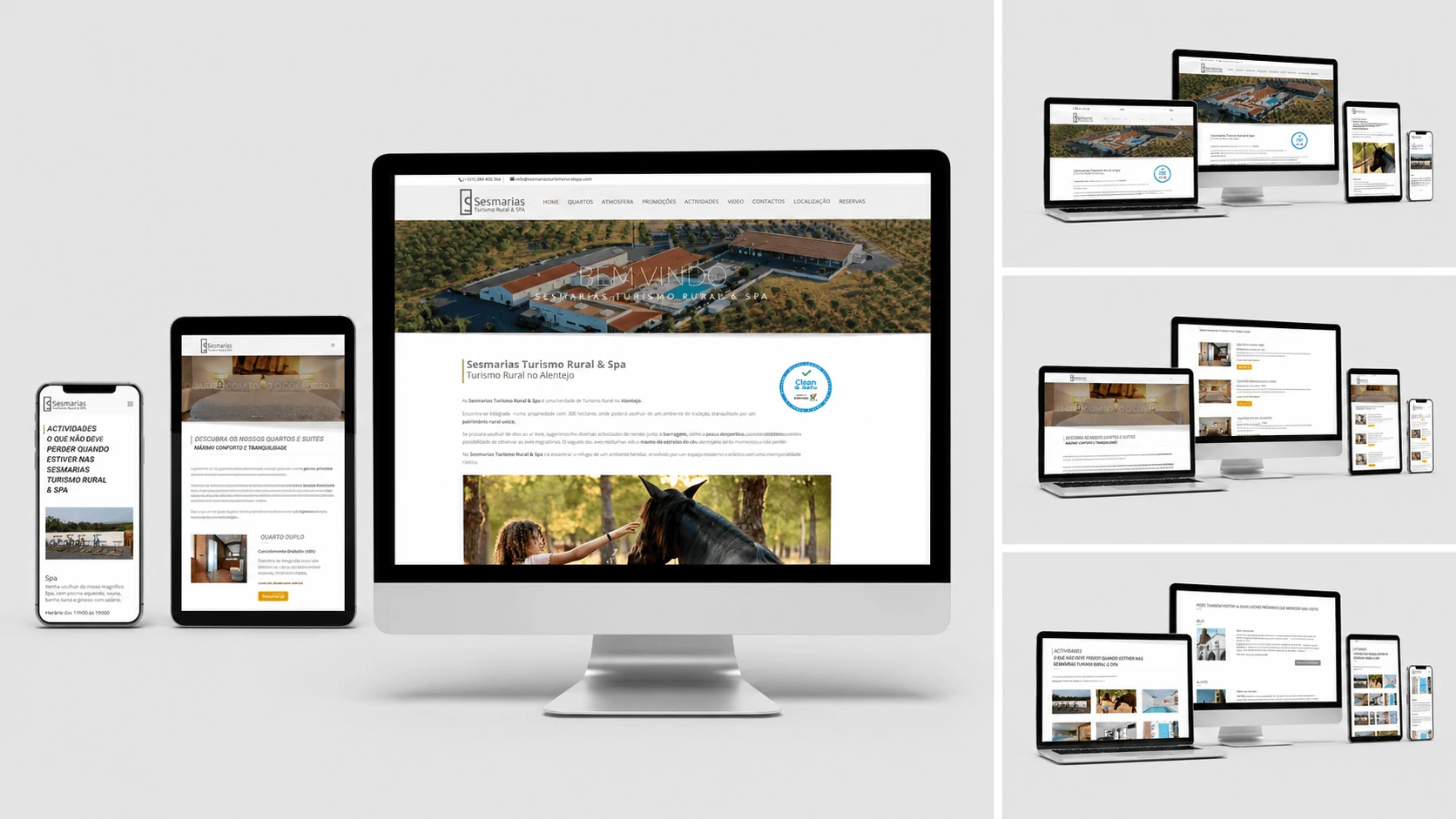
Responsive behaviour was considered at structural level rather than added after desktop completion. Content order, image proportions, readable line lengths, navigation density and booking actions were adjusted for tablet and mobile contexts.
06 · Booking and location integrations
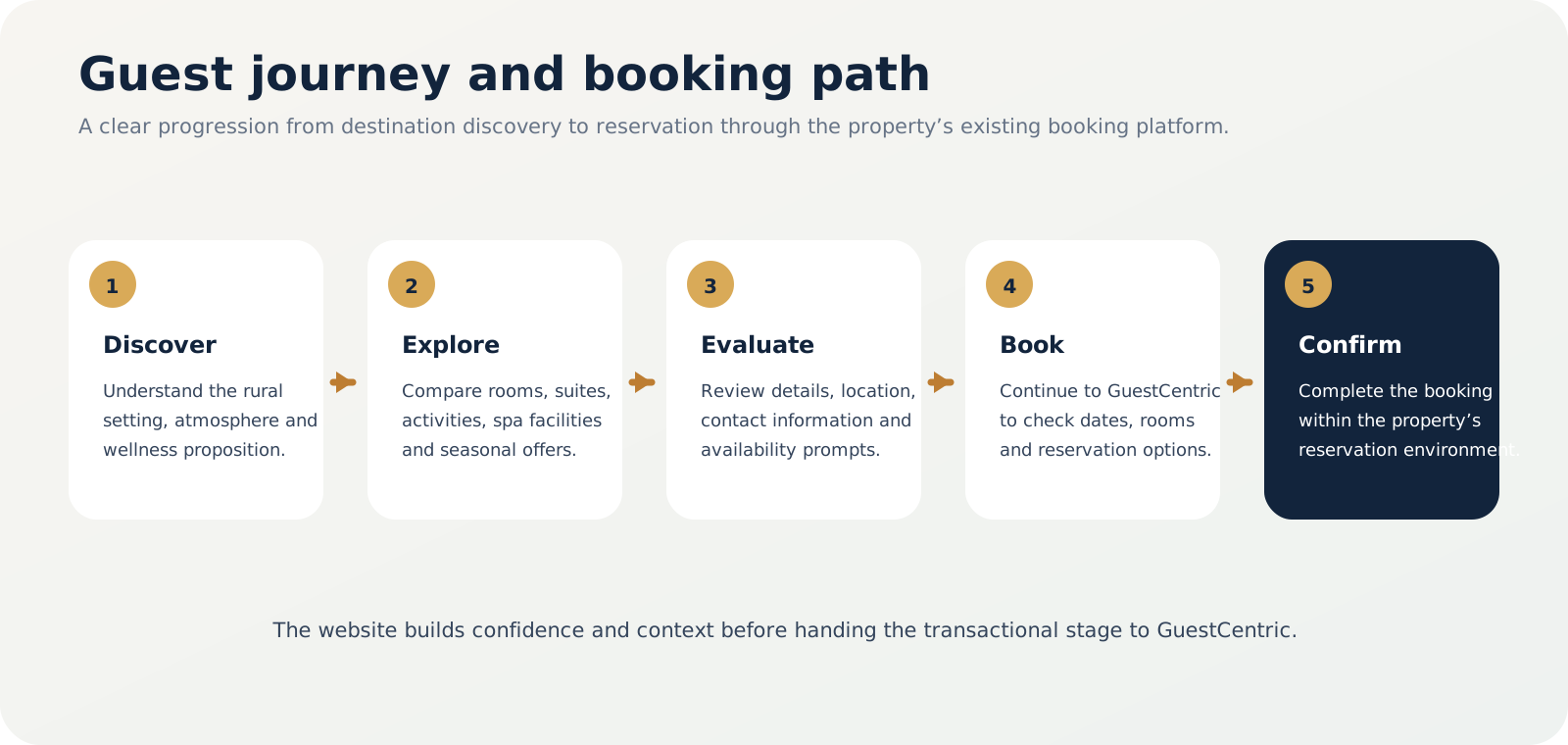
The informational experience builds confidence before transferring the transactional stage to GuestCentric.
GuestCentric was integrated as the property’s reservation environment, allowing visitors to continue from website discovery to room availability and booking. Calls to action were positioned around high-intent content rather than treated as isolated buttons.
Google Maps supports location discovery and route planning, while telephone, email and contact information provide alternative conversion paths for guests who prefer direct assistance.
07 · Technical delivery and infrastructure
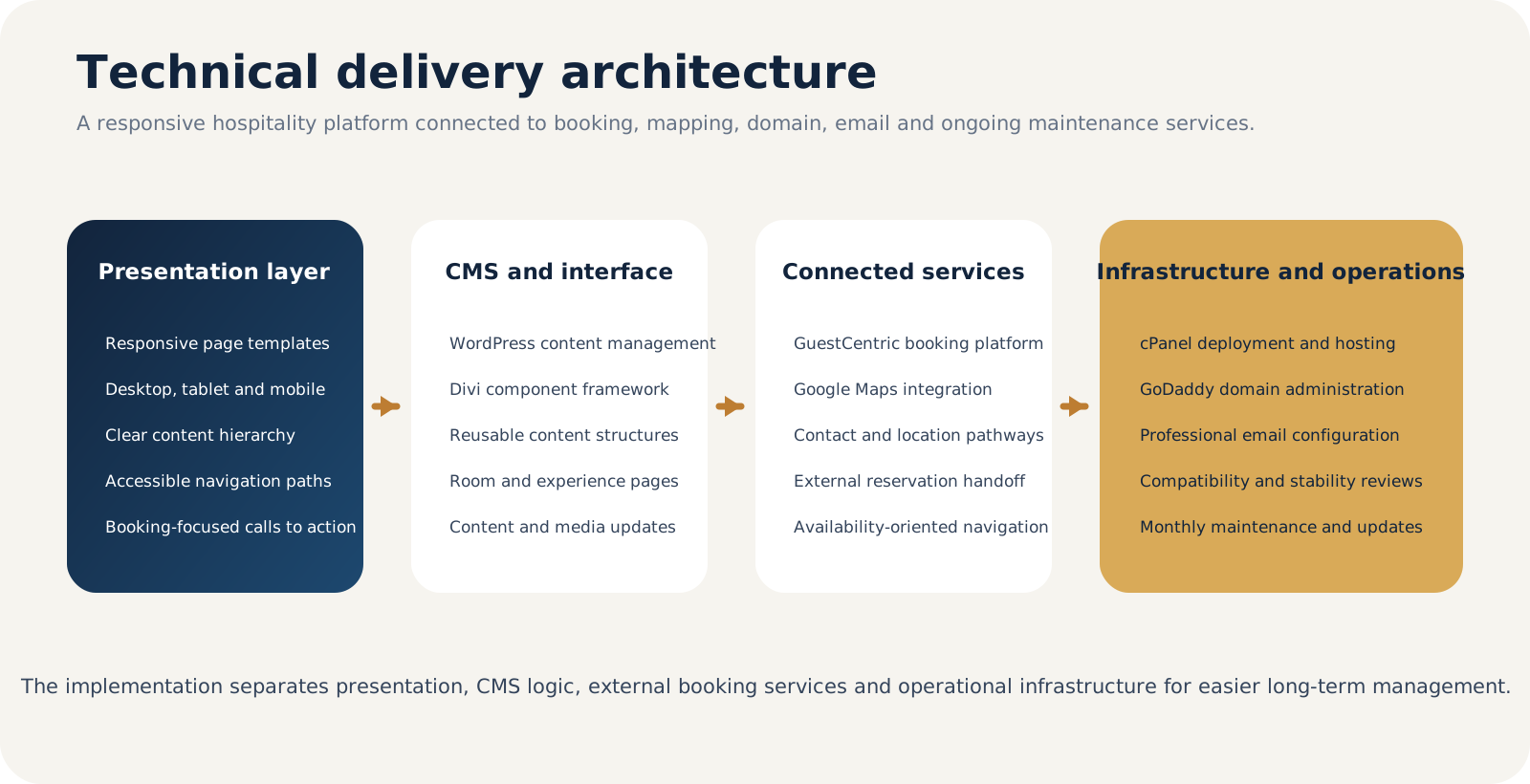
The website was delivered as a maintainable WordPress platform connected to external booking and operational services.
The technical scope extended beyond page construction. It included deployment and configuration through cPanel, hosting administration, GoDaddy domain management, professional email setup and the connection of external services required for location and reservation functionality.
WordPress provides content administration, while Divi supports the reusable visual layer. Separating the institutional website from GuestCentric’s transaction environment allowed each system to perform its specialised role without forcing reservation logic into the CMS.
08 · Ongoing maintenance
The relationship continued after launch through monthly technical and content support.
Monthly maintenance helps preserve the reliability of a platform that supports active hospitality operations. The work includes content updates, interface adjustments, compatibility reviews, technical checks and general continuity across the website and its connected services.
This ongoing model allows the digital experience to evolve alongside seasonal promotions, changes in accommodation content, new activities and operational requirements without losing consistency.
Content continuity
Room, promotional, activity and institutional information can be updated as the offer evolves.
Technical stability
Compatibility and functional reviews reduce the risk of broken content or disrupted user journeys.
Operational support
Domain, email, hosting and website management remain connected within one maintenance relationship.
09 · Full project gallery
From wireframe architecture to a responsive rural-hospitality and booking experience.
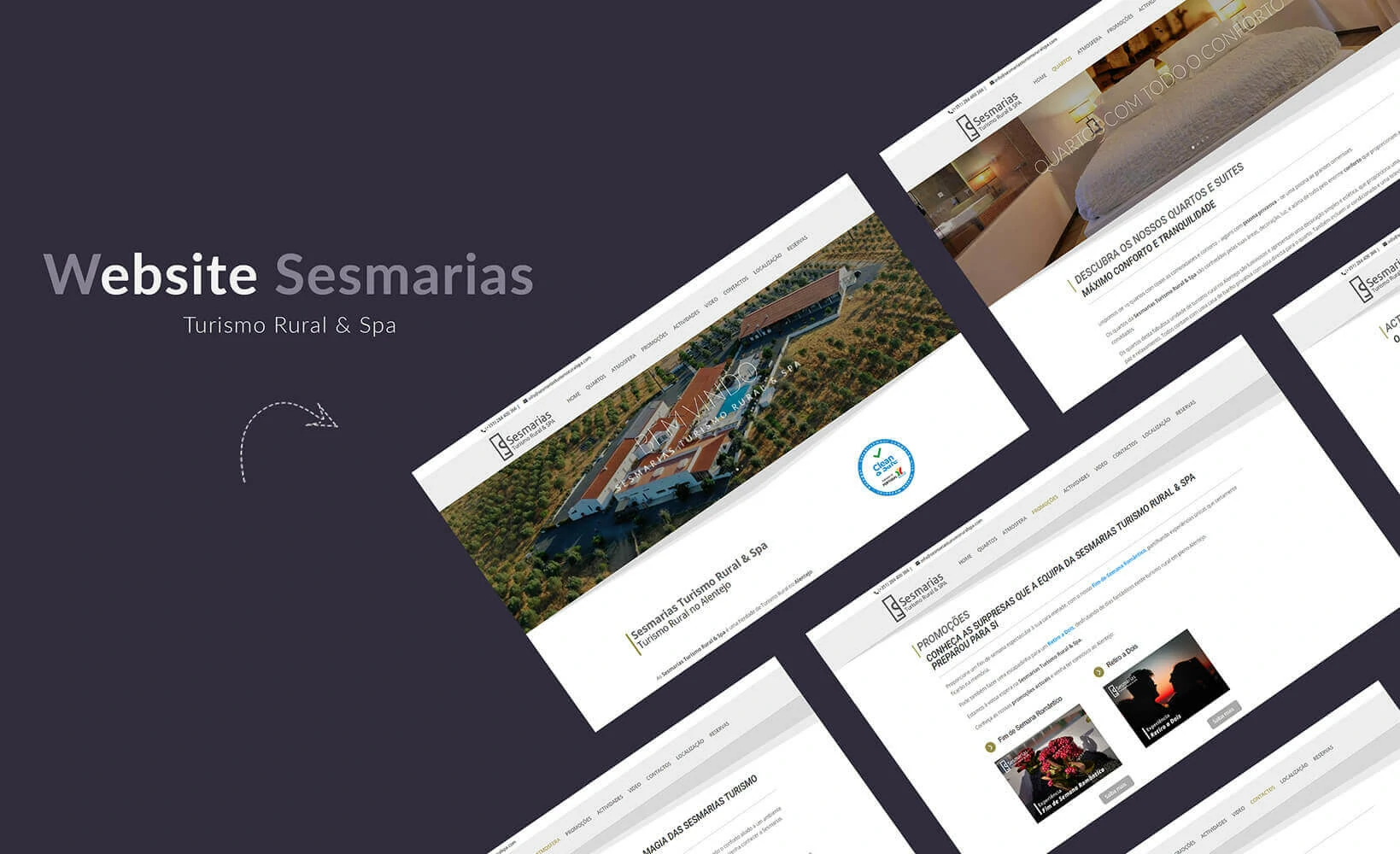
The gallery documents the final website presentation, cross-device behaviour, structural wireframes, guest journey and technical delivery model.
10 · Outcome and learning
A professional and maintainable hospitality platform that connects destination content with a practical route to booking.
The final website gives Sesmarias Turismo Rural & SPA a coherent digital presence capable of presenting the property’s accommodation, wellness offer and rural experiences across multiple devices. Visitors can move from inspiration to practical information and reservation without encountering disconnected content structures.
Clearer guest discovery
Structured content helps visitors understand rooms, services, experiences and location before making a decision.
Integrated booking path
GuestCentric remains the transactional engine while the website provides the context and confidence that precede booking.
Long-term continuity
A maintainable WordPress structure and monthly support allow the platform to evolve with the property.
Design learning
Hospitality UX works best when emotional storytelling, factual comparison and transactional pathways are designed as one continuous decision journey rather than as separate website features.