UX/UI · WordPress · Conditional Forms · Conversion · Digital Operations
Pró Resíduos
A responsive construction-waste platform combining clear service communication, dynamic lead qualification, editorial content, conversion tools and ongoing technical management.
PlatformWordPress · Divi · cPanel · Blog · Conditional Forms
EngagementDevelopment, launch and monthly maintenance
01 · Project overview
A specialist environmental service translated into a clearer, more conversion-oriented digital platform.
Pró Resíduos provides collection, transportation, container services and responsible management of construction waste as part of the A2 Prado Group.
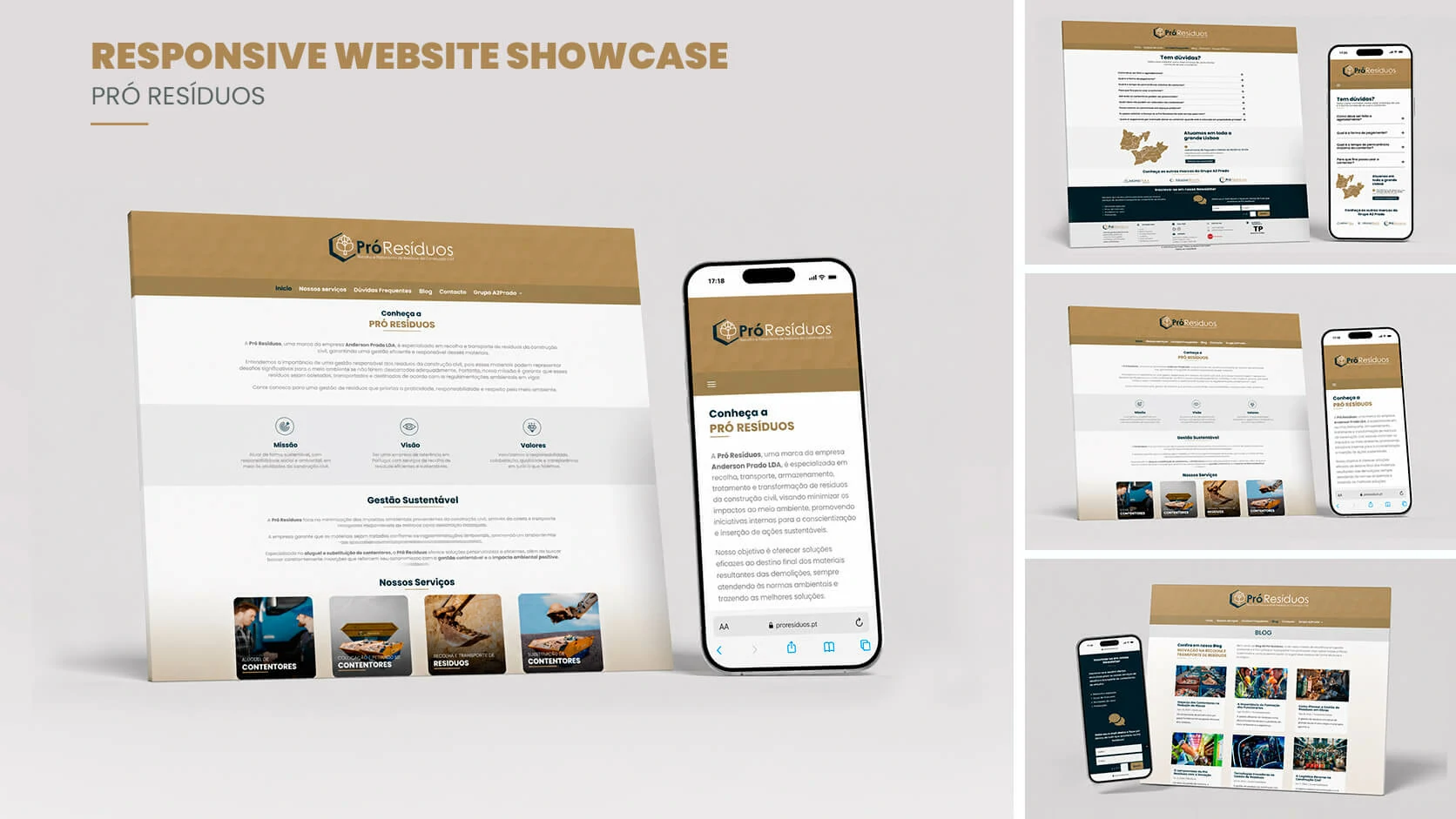
The website was designed and developed to communicate the company’s services with greater clarity, help customers understand operational requirements and transform general interest into structured quotation requests. The result is not only an institutional presence, but a practical service interface connecting information, qualification and commercial follow-up.
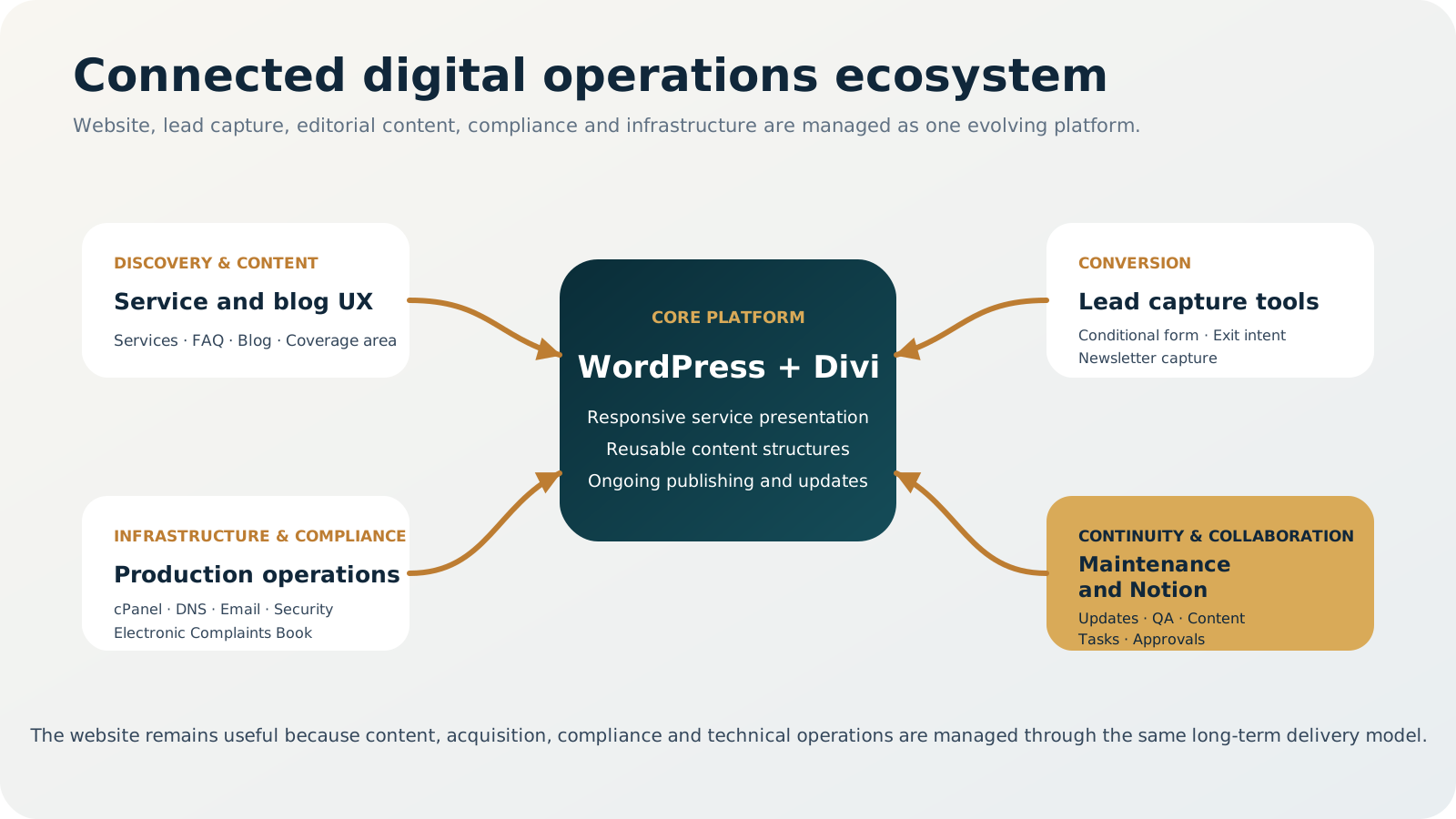
WordPress and Divi provided a maintainable publishing environment, while responsive page structures, dynamic forms, FAQ content, blog publishing, newsletter capture and technical infrastructure created a foundation capable of evolving alongside the company’s operational and communication needs.
Primary objectiveQualified service enquiries
Visitors are guided from service discovery to a form that captures the context required for quotation preparation.
Experience modelResponsive and task-oriented
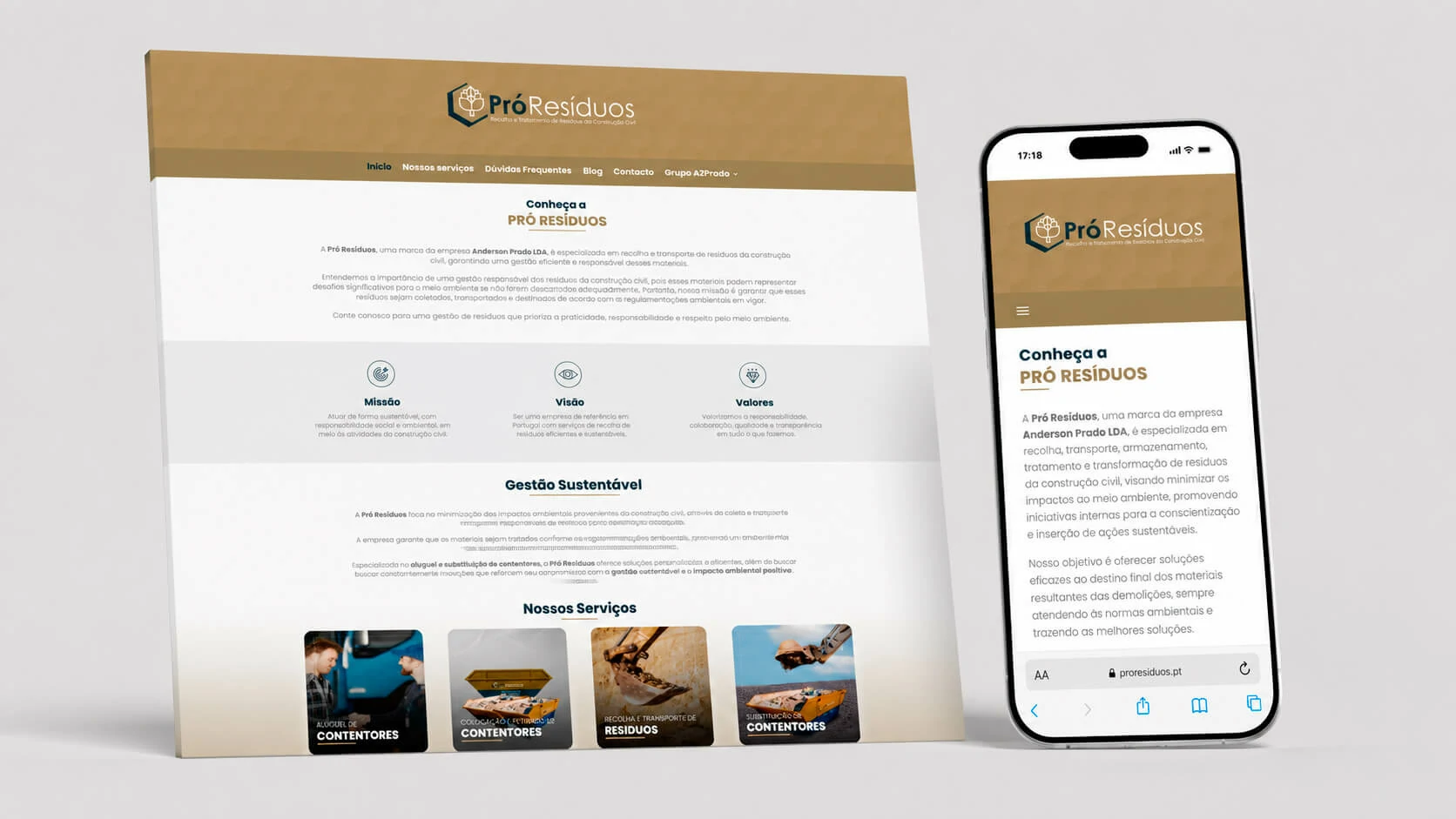
Service pages, FAQ content, coverage information and contact paths remain accessible across desktop and mobile devices.
Operating modelContinuous platform management
The engagement includes publishing, infrastructure, compliance, maintenance and coordinated multi-brand project operations.
02 · Experience challenge
Waste-management enquiries depend on logistical and regulatory context that a generic contact form cannot capture.
Customers may need container rental, placement, replacement, collection or transport for different categories of construction waste. Each request can depend on location, access, required date, service duration, waste type and whether the container will occupy public space.
The UX challenge was therefore twofold: present the offer in a way that non-specialist users could understand, while collecting enough operational detail to make each submission useful to the commercial team. The interface also needed to support educational content and regulatory guidance without making the journey feel overly technical.
01
Service clarity
Container, collection, transport and replacement services needed clear distinctions and practical explanations.
02
Operational context
Location, waste type, dates and public-space requirements influence the appropriate response.
03
Lead quality
Incomplete submissions increase clarification work and delay quotation preparation.
04
Long-term communication
FAQ, blog and newsletter content had to fit the same scalable digital structure.
03 · Role and workflow
The engagement covered interface implementation, technical deployment, conversion logic and ongoing platform operations.
I participated as the website developer and digital platform manager, taking responsibility for the implementation from initial environment setup through launch and monthly maintenance.
The workflow included content architecture, wireframes, responsive Divi implementation, form logic, newsletter conversion, cPanel deployment, domains, DNS, professional email, blog management, compliance integration, quality assurance and coordination with the wider A2 Prado Group through Notion.
UX and structure
Service hierarchy, wireframes, navigation, FAQ design, calls to action and responsive behaviour.
Development and infrastructure
WordPress, Divi, cPanel, hosting, domains, DNS, email and production configuration.
Ongoing digital operations
Blog, content, forms, maintenance, compliance, testing and collaborative project management.
04 · Information architecture and wireframes
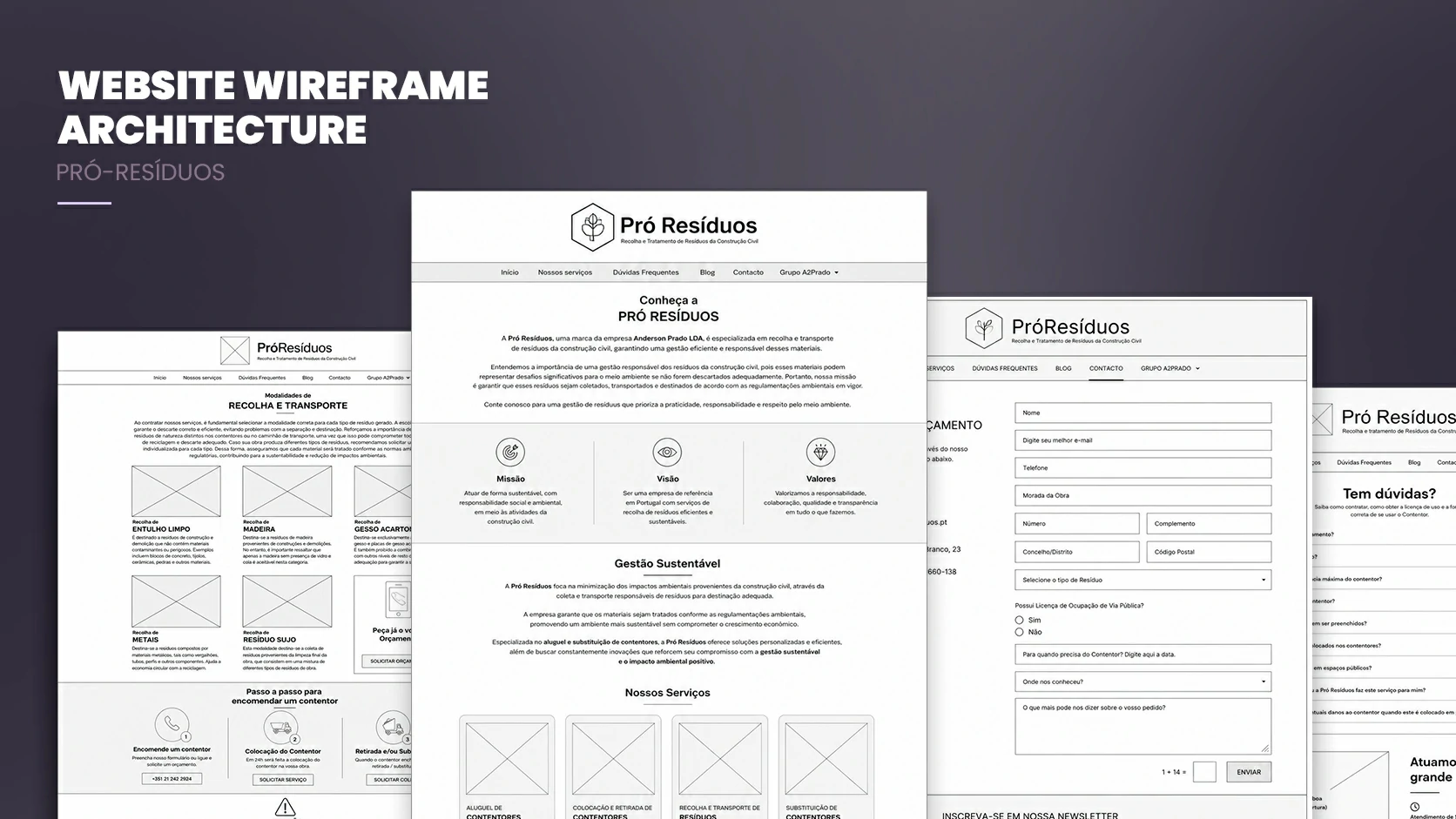
Wireframes established a predictable relationship between service discovery, trust, operational guidance and conversion.
Low-fidelity wireframes were used to validate content order, page density, service groupings, FAQ behaviour and contact-flow placement before visual implementation. This reduced the risk of treating each page as an isolated layout and created a consistent framework for future updates.
The architecture connects the company overview, mission and sustainability positioning with core services, coverage information, FAQs, the blog, newsletter capture and the quotation form. Reusable Divi structures then translated this logic into responsive page templates.
Discover
Understand the company
Positioning, sustainability commitments and service scope establish trust before the user takes action.
Explore
Identify the relevant service
Service cards and supporting explanations help visitors match their need to the correct operational solution.
Clarify
Resolve practical questions
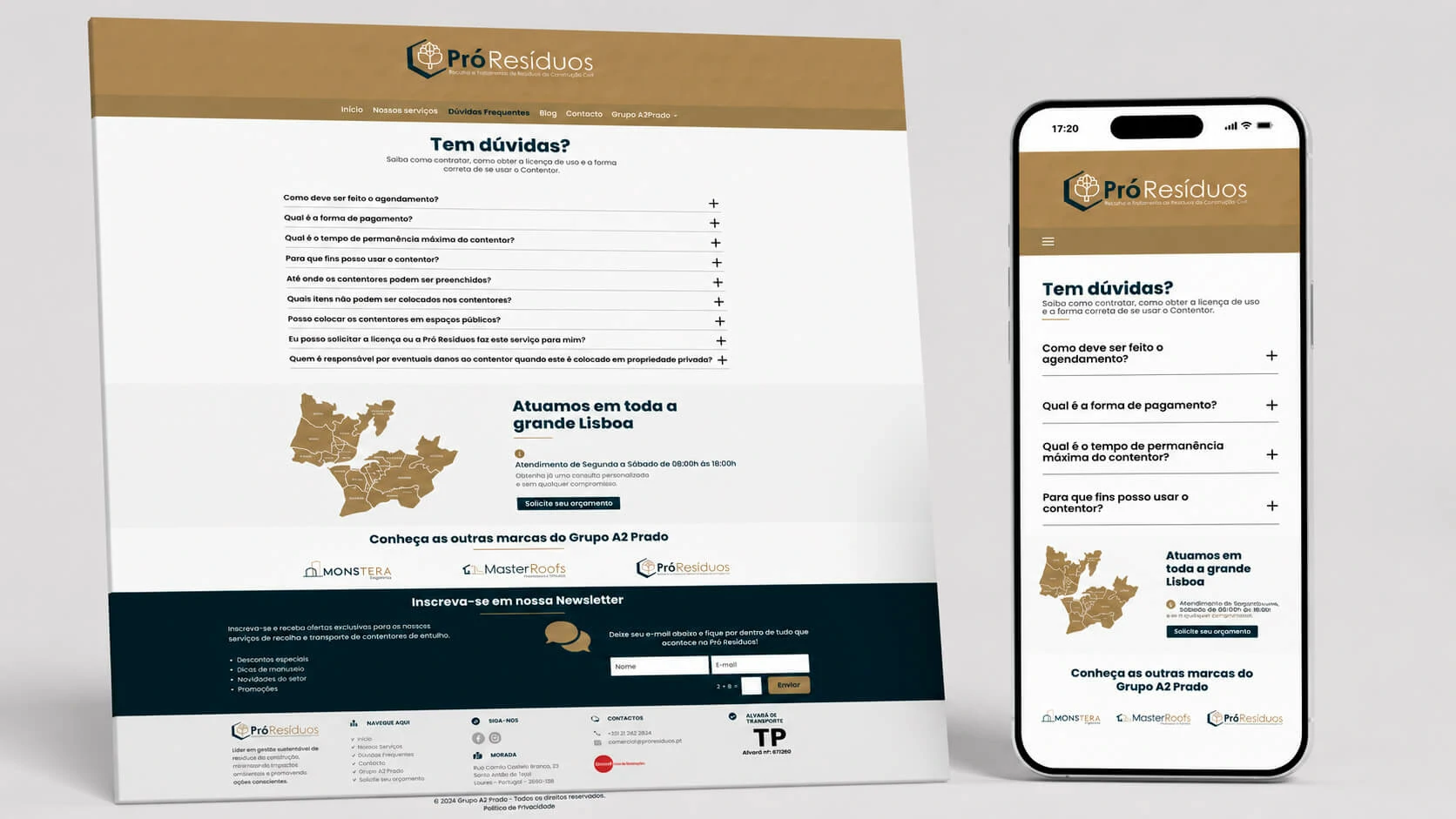
FAQ content addresses timing, payment, public-space licences and container restrictions.
Convert
Submit useful project context
The dynamic form reveals the fields required for the selected service and location.
05 · Conditional lead qualification
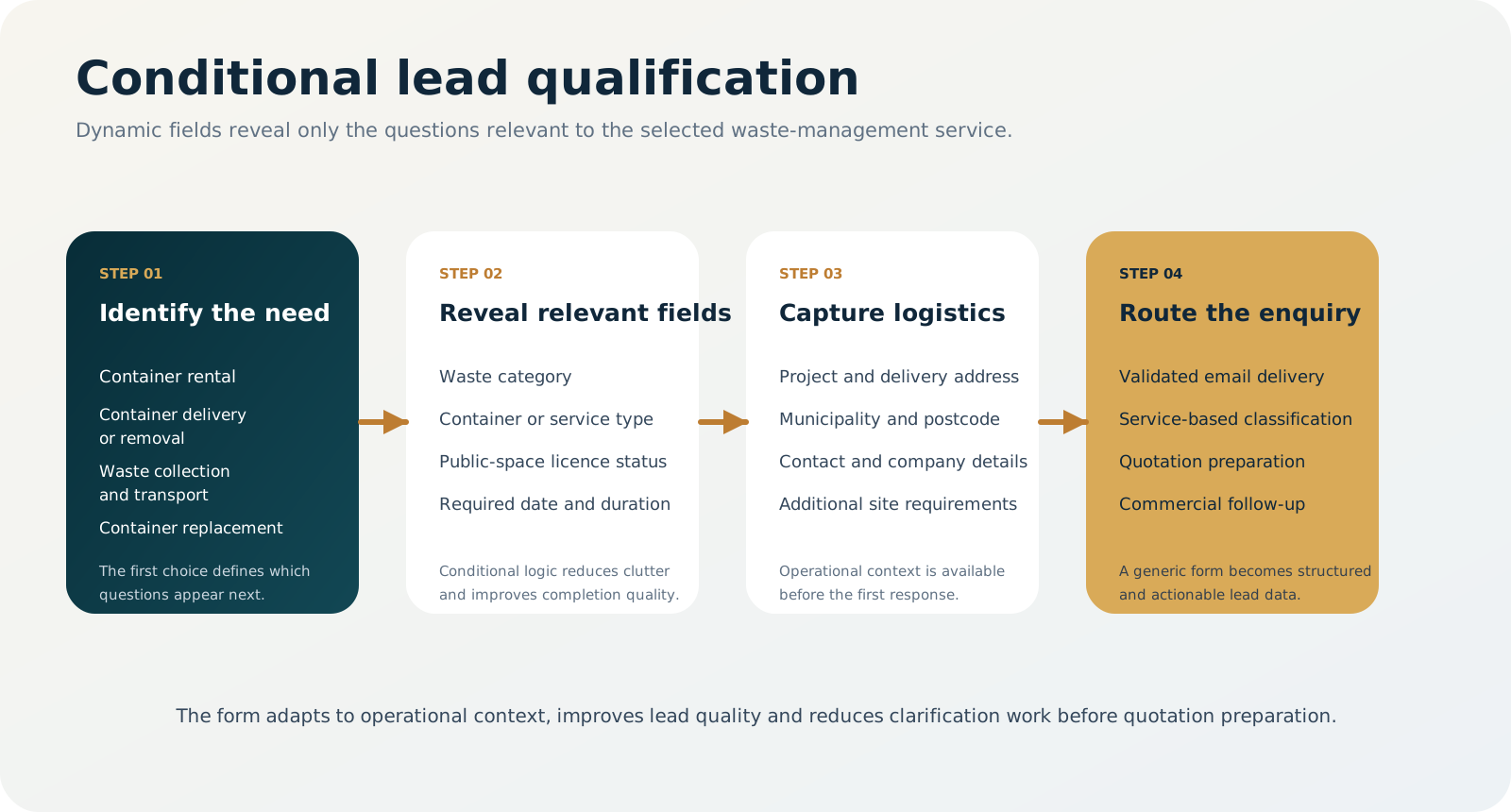
The contact flow uses conditional logic and dynamic fields to adapt the form to each service request.
Instead of showing every possible field to every visitor, the form changes according to the options selected. This interaction pattern is commonly described as conditional logic or progressive disclosure: relevant fields are revealed only when they are needed.
The form can therefore capture the selected service, waste category, project address, municipality, postcode, public-space licence status, required date and additional site information without making the initial interface unnecessarily long. The resulting submission gives the company better operational context and supports faster internal classification.
Interaction patternProgressive disclosure
Additional fields appear only when a previous answer makes them relevant.
Business valueBetter enquiry classification
Service and logistics data can be reviewed before the first commercial response.
User valueLess unnecessary complexity
Visitors complete a more focused form instead of navigating unrelated questions.
06 · Conversion and retention strategy
A secondary conversion path keeps contact with visitors who are not yet ready to request a service.
An exit-intent pop-up was implemented to detect when a visitor appeared likely to leave the website. At that point, the interface offered newsletter subscription rather than repeating the primary quotation request.
The newsletter proposition included special discounts, maintenance guidance, sector updates and promotional opportunities. This creates a lower-commitment path for users who are still researching and allows the company to continue the relationship through future content and campaigns.
Primary conversion
Request a quotation with service and logistics context.
Secondary conversion
Subscribe for discounts, advice, sector news and future promotions.
Decision support
FAQ content reduces uncertainty before users submit an enquiry.
07 · Blog, content and compliance
Editorial content supports education, credibility and long-term organic visibility.
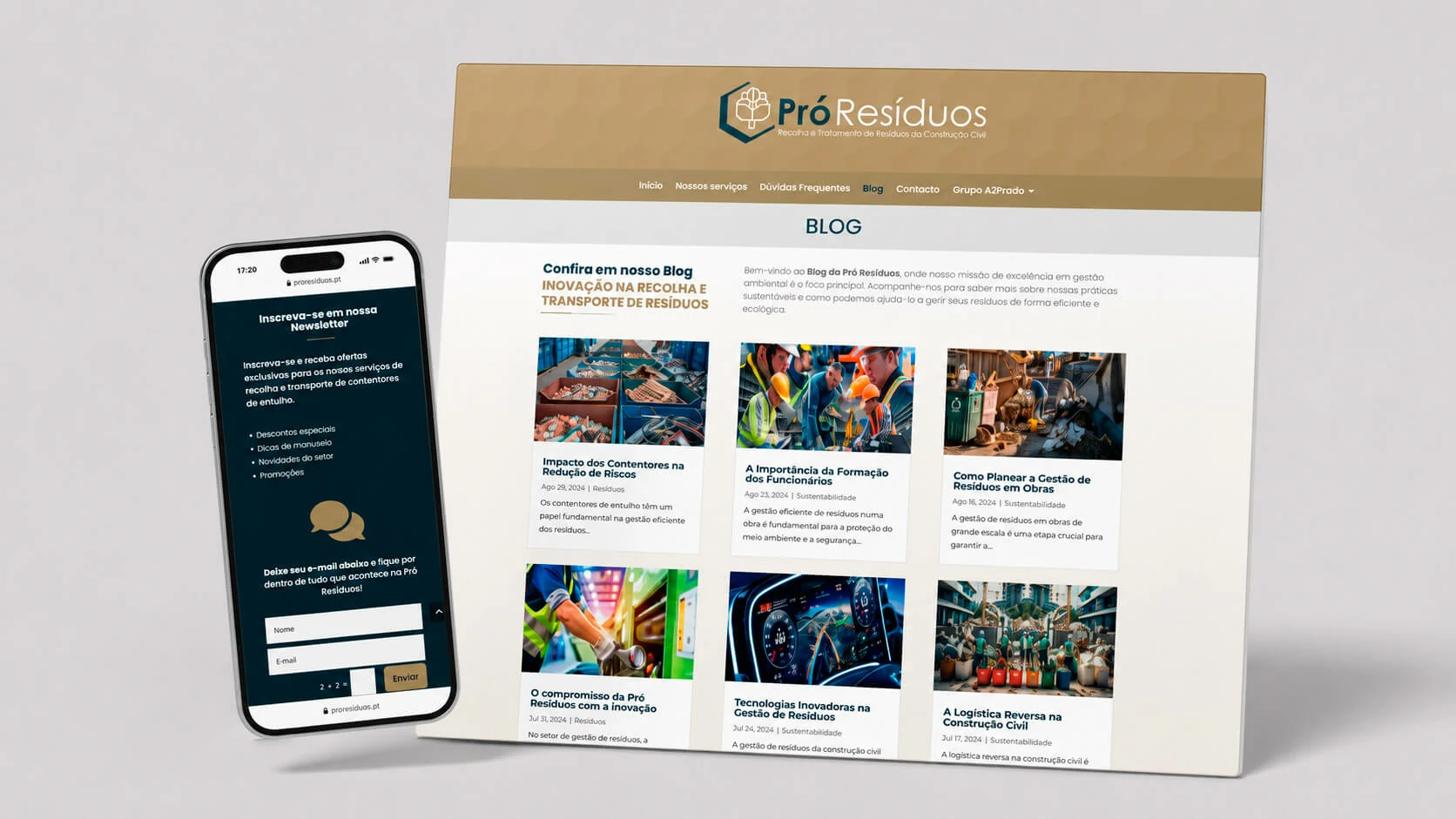
I developed, managed and curated the company blog as part of the wider website system. Articles address construction-waste planning, container use, sustainability, logistics, safety, innovation and responsible disposal practices.
The content model allows the company to explain operational topics in a more accessible format, create internal links to relevant services and provide useful material for newsletter or future social communication. Portugal’s Electronic Complaints Book was also integrated so visitors could access the official consumer-complaints platform from the website.
Editorial principle
Technical content becomes commercially useful when it resolves practical questions, demonstrates expertise and leads users naturally towards the relevant service or contact path.
08 · Technical delivery and infrastructure
The delivery included the production environment, communication services and operational safeguards—not only the visible interface.
The platform was developed in WordPress using Divi and deployed through cPanel. The technical scope included hosting configuration, domain and DNS administration, professional email setup, form validation and delivery testing, responsive front-end adjustments, plugin compatibility, security checks, backups and monthly preventive and corrective maintenance.
This broader implementation ensured that the website could operate as a dependable business tool rather than a static collection of pages.
WordPressCMS, reusable pages, blog and ongoing content publishingDiviResponsive components, visual templates and scalable page managementHTML5 + CSSSemantic structure, responsive refinement and interface correctionscPanelDeployment, files, email accounts and hosting administrationDNS + HTTPSDomain routing, secure production access and environment connectionForms + EmailConditional fields, validation, routing and notification testingSecurity + BackupsPreventive checks, update control and recovery foundationsComplaints BookIntegration with Portugal’s official electronic consumer platform
09 · Maintenance and collaborative management
The platform continues to evolve through monthly maintenance and a shared multi-company operating workflow.
Ongoing responsibilities include WordPress and plugin updates, content implementation, form monitoring, responsive checks, technical troubleshooting, compatibility reviews and general platform quality assurance.
Because Pró Resíduos belongs to the A2 Prado Group, website and communication activities were coordinated alongside other group initiatives through Notion. The workspace centralised tasks, deadlines, assets, content calendars, approvals, team communication and progress tracking across several simultaneous projects.
Maintain
Technical continuity
Updates and testing preserve forms, responsive behaviour and production stability.
Publish
Content operations
Blog articles, service information and campaign content remain current and reusable.
Coordinate
Shared Notion workspace
Tasks, assets, owners and approvals are connected to the relevant group initiative.
Improve
Continuous optimisation
Operational feedback can inform changes to content, forms and interface priorities.
10 · Full project gallery
From wireframe architecture to responsive delivery, qualified enquiries and ongoing digital operations.
The gallery documents the complete service website, FAQ and newsletter experience, responsive home page, editorial blog, structural wireframes and technical workflow diagrams.
11 · Outcome and learning
A maintainable service platform that improves clarity for customers and context for the commercial team.
The resulting website combines service communication, responsive UX, conditional lead qualification, FAQ support, editorial content, newsletter capture, compliance and ongoing platform management within one cohesive experience.
Clearer service discovery
Visitors can understand the company’s offer, operational coverage and practical requirements more quickly.
More useful enquiries
Conditional logic captures service and logistics context before commercial follow-up begins.
Sustainable digital operations
Reusable structures, monthly maintenance, blog publishing and coordinated project management support long-term continuity.
Design learning
For logistics and environmental services, conversion quality depends on connecting interface simplicity with operational specificity. Progressive disclosure allows the user experience to remain approachable while still collecting the information required for a meaningful response.