
UX/UI · WordPress · Lead Generation · SEO · Social Media
Master Roofs
A conversion-focused construction website combining qualified enquiry architecture, technical education, SEO, infrastructure management and ongoing social communication.
A conversion-focused construction website combining qualified enquiry architecture, technical education, SEO, infrastructure management and ongoing social communication.
Master Roofs is a Portuguese construction company specialising in roofing and façade solutions for private properties, companies and condominium-management organisations.
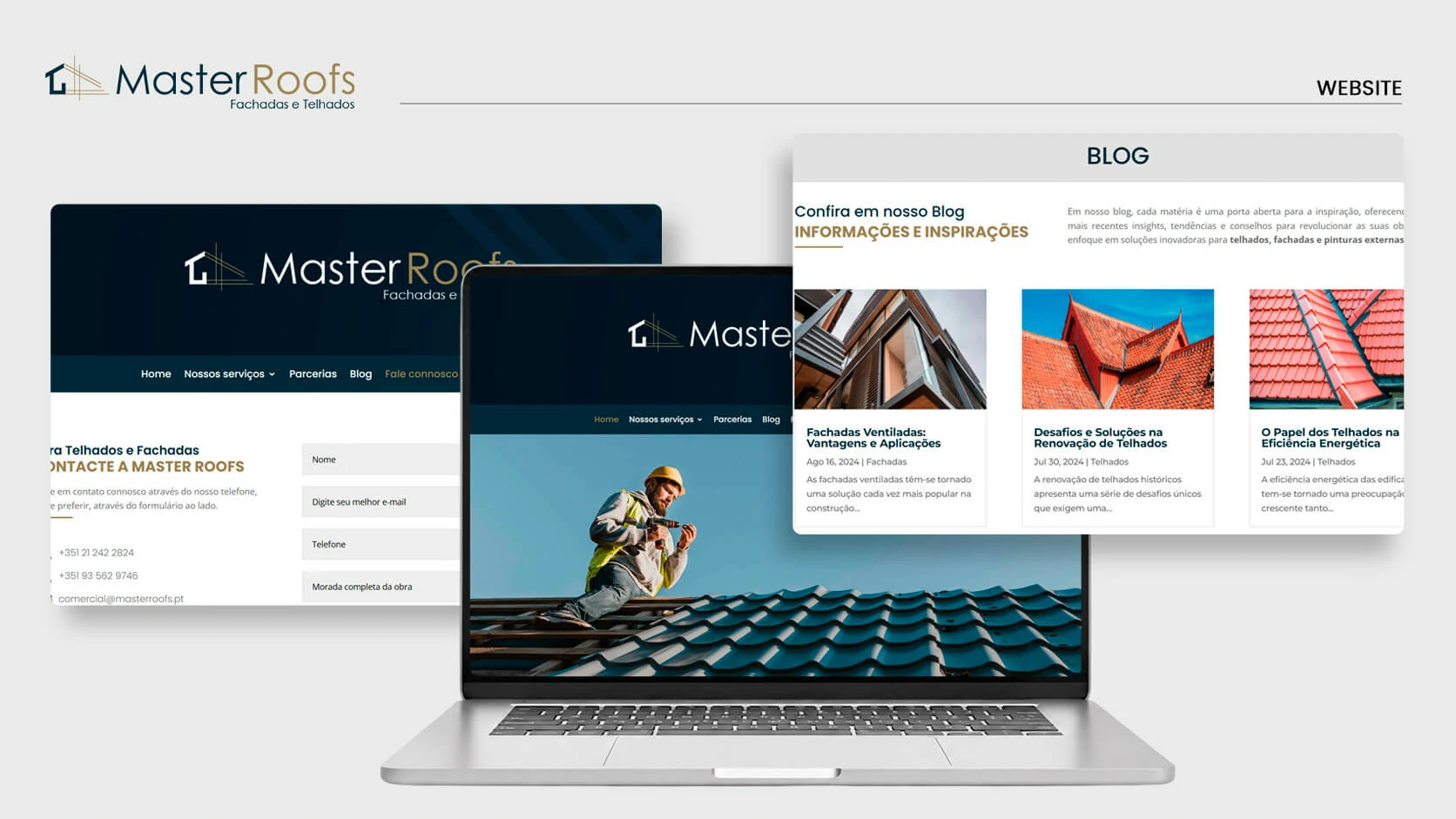
The project combined website development, conversion-oriented UX, technical content, SEO, lead qualification, social media and ongoing platform management. Rather than treating the website as a static institutional presentation, the digital experience was structured as an active commercial system capable of educating users, building trust and transforming interest into better-qualified quotation requests.
WordPress and Divi provided a maintainable publishing foundation, while reusable components, responsive page structures and segmented forms supported a broad service catalogue covering new roof construction, renovation, cleaning, maintenance, waterproofing and façade work.
Service content and contact flows were designed to give the commercial team better context before the first response.
Pages, blog articles and video resources help users understand complex roofing decisions before requesting a quotation.
The engagement includes infrastructure, SEO, content, forms, social communication and monthly technical maintenance.
A private homeowner evaluating a roof renovation does not have the same requirements as a company, condominium manager or commercial property operator. Each user arrives with different levels of technical knowledge, urgency, contracting context and project complexity.
The design challenge was to clarify the company’s broad service portfolio without overwhelming visitors. The information architecture therefore had to connect service discovery, technical explanation, trust signals, project context and conversion points within a predictable journey.
Private, corporate and condominium users require distinct commercial context and project information.
Roofing systems, maintenance and façade solutions needed to become understandable without losing credibility.
A generic contact form would create incomplete enquiries and additional qualification work for the sales team.
New services, articles, campaigns and social content had to fit an expandable content system.
I contributed as both Web Developer and Social Media Manager, taking responsibility for the implementation, infrastructure, interface refinement and ongoing evolution of the company’s digital presence.
The workflow covered discovery, information architecture, wireframes, Divi implementation, responsive behaviour, forms, hosting, domains, DNS, professional email, content publishing, technical quality assurance, SEO and social-media production. Real service information and commercial requirements were used to validate the interface rather than designing the website independently from operational needs.
Service taxonomy, user journeys, wireframes, calls to action and enquiry sequencing.
WordPress, Divi, cPanel deployment, responsive implementation, domains, DNS and email.
Blog, SEO, forms, social media, maintenance, troubleshooting and coordinated approvals.
The structural phase organised the experience around the questions users ask before contacting a roofing specialist: what solution applies, how the system works, what evidence supports it, whether the company serves the property type and what information is needed for a quotation.
Repeatable page patterns were created for service categories, blog articles and technical-system content. This reduced interface variation, improved scanability and made future publishing more efficient inside Divi.
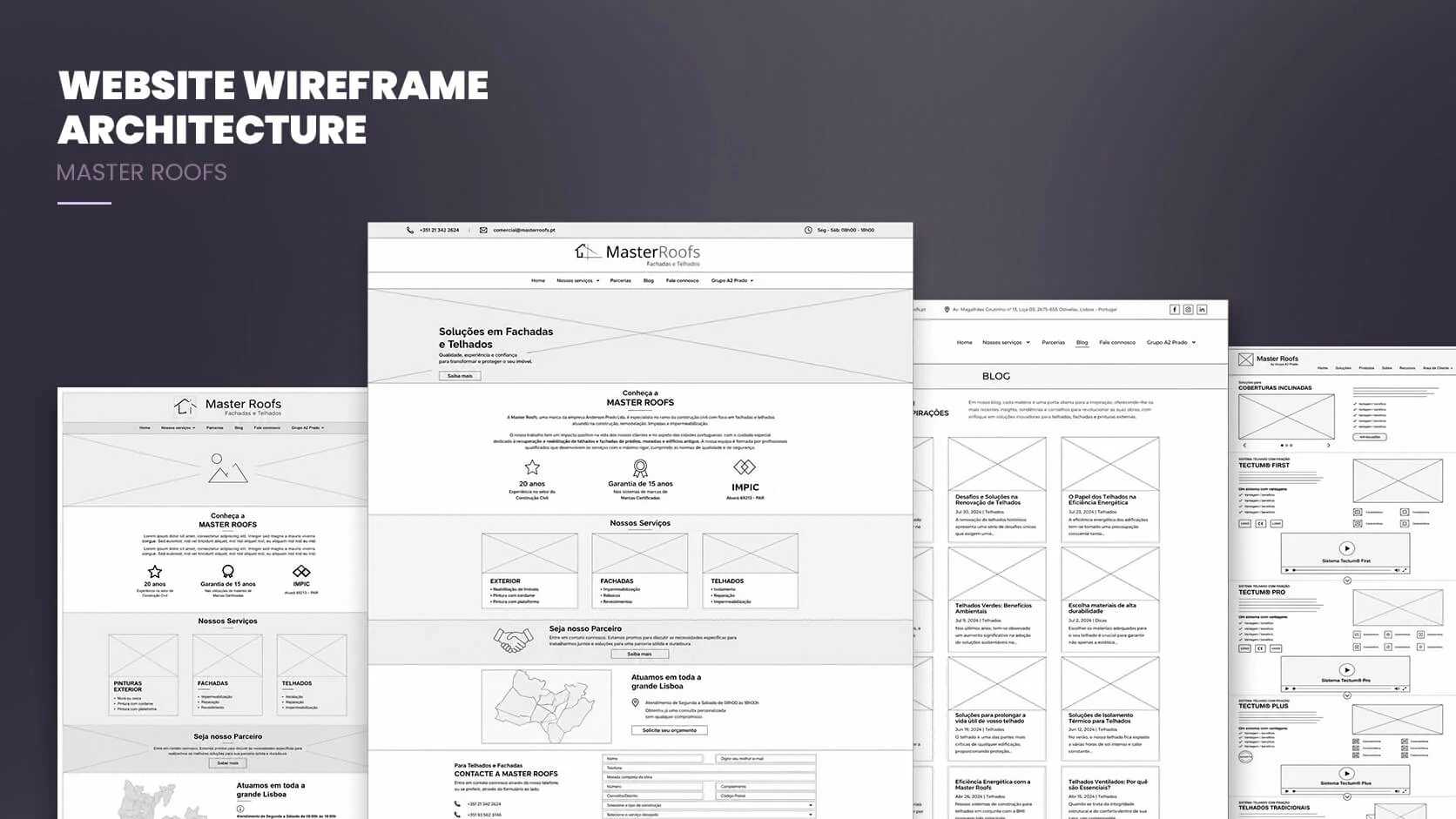
A construction website becomes easier to use when each page clearly separates the problem, the applicable solution, technical reassurance and the next commercial action.
The customised form segments users by customer profile, requested service, project address, contracting context, project requirements and acquisition source. Service options include roof construction, renovation, cleaning, maintenance, façade work, waterproofing and other specialised requests.
This progressive structure improves the usefulness of each submission. The commercial team can understand who is contacting the company, what type of work is required and where the project is located before beginning the conversation.
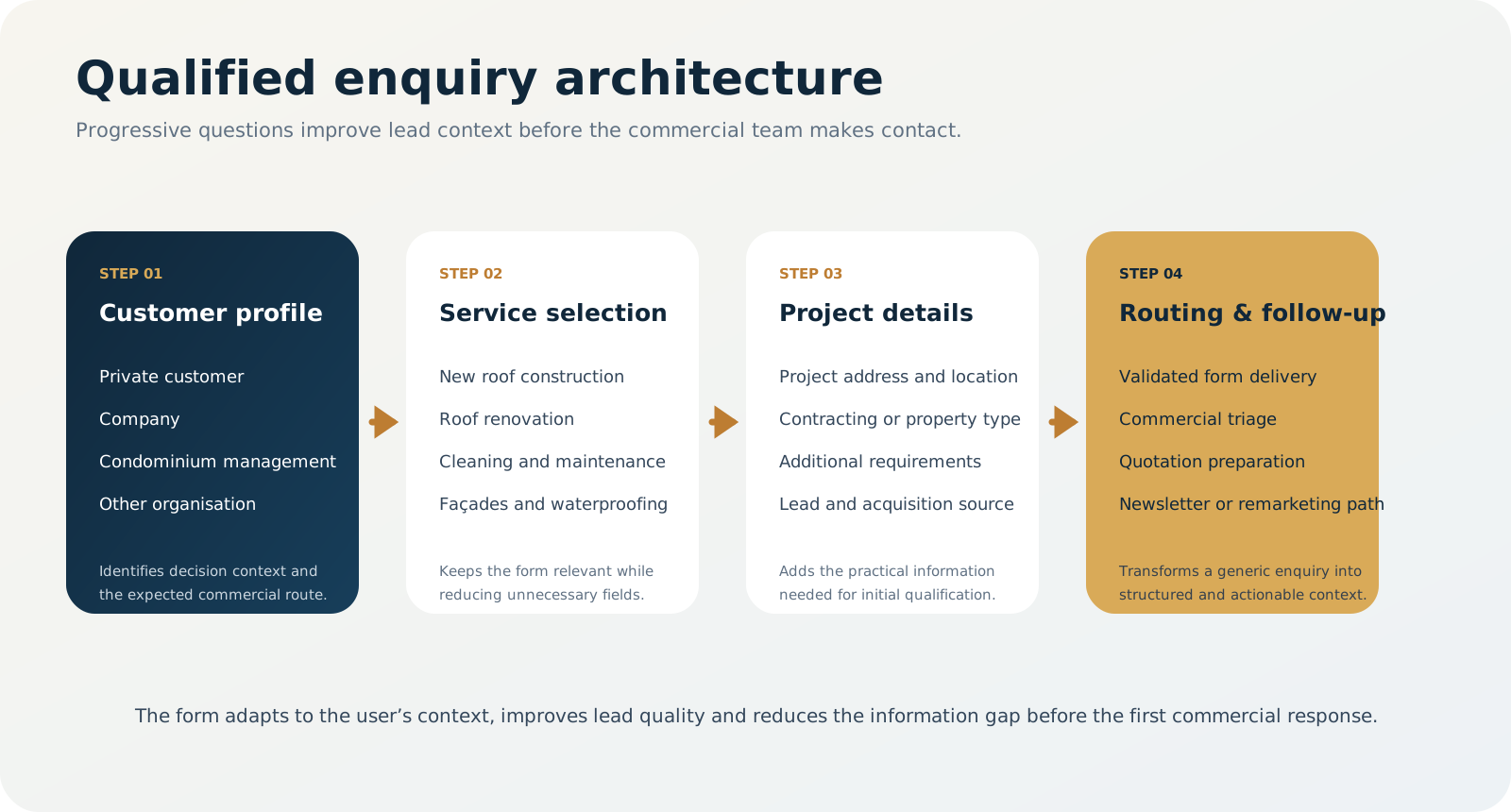
The flow distinguishes private customers, companies, condominium managers and other organisations.
Service selection keeps the form focused on the information required for that category.
Location, property and requirement data reduce the information gap before commercial follow-up.
Structured submissions make quotation preparation and internal routing more consistent.
An exit-intent pop-up was implemented to detect when a visitor appeared ready to leave the website. Instead of repeating the primary quotation request, it offered a lower-commitment newsletter subscription connected to useful and commercially relevant content.
The proposition included special promotions and discounts, roof and façade maintenance advice, technical articles, sector news and company updates. This gives undecided users a reason to remain connected and creates an audience for future email marketing or remarketing activity.
Qualified project data supports direct commercial follow-up.
Exit-intent capture preserves contact with users at an earlier decision stage.
Maintenance advice and future campaigns create reasons to re-engage.
The blog was developed and managed to educate potential customers, strengthen technical authority and support organic search visibility. Topics include roof maintenance, thermal insulation, waterproofing, ventilated roofs, façade restoration, materials and advanced roofing systems.
YouTube content was also integrated to explain BMI technologies and systems such as Tectum® Pro and micro-ventilated roof structures. Combining text, diagrams, imagery and video makes complex subjects more accessible to property owners, companies and condominium managers.
Educational content supports conversion when it reduces uncertainty, connects technical features to real property needs and gives users enough confidence to begin a commercial conversation.
The website was developed in WordPress using Divi and deployed through cPanel. The technical scope included hosting and server-side configuration, domain and DNS administration, professional email setup, form validation and delivery testing, plugin management, responsive corrections, security, backups, performance checks and monthly preventive and corrective maintenance.
The Portuguese Electronic Complaints Book was integrated into the website so users could access the official consumer-complaints platform from the digital experience.
Ongoing work includes service-page creation, blog publishing, semantic heading organisation, metadata and page-title optimisation, internal links, image compression, alternative text, URL improvements, WordPress and plugin updates, form monitoring, technical troubleshooting and continuous UI refinement.
The content strategy is aligned with relevant topics around roofing, façades, maintenance, insulation and construction systems so that search visibility and commercial relevance develop together.
New articles, services, media and campaign pages are implemented within reusable structures.
Metadata, headings, links, URLs and media are refined as the content library grows.
Updates, testing and troubleshooting preserve conversion paths and production stability.
Because the project formed part of a broader ecosystem of websites, communication assets and ongoing initiatives, Notion was used as the central workspace for planning, task and deadline management, content calendars, approvals, asset organisation, team communication and progress tracking.
This structure improved visibility across simultaneous projects, reduced fragmented communication and made dependencies between website, content and campaign work easier to manage.
Tasks, owners, deadlines and project status remained visible across the team.
Editorial calendars, briefs and assets were organised within one workflow.
Feedback and decisions were connected to the relevant deliverable.
Progress could be monitored across several A2 Prado Group initiatives.
The gallery documents the responsive website, editorial and blog environment, social communication, lead architecture and coordinated digital operating model.
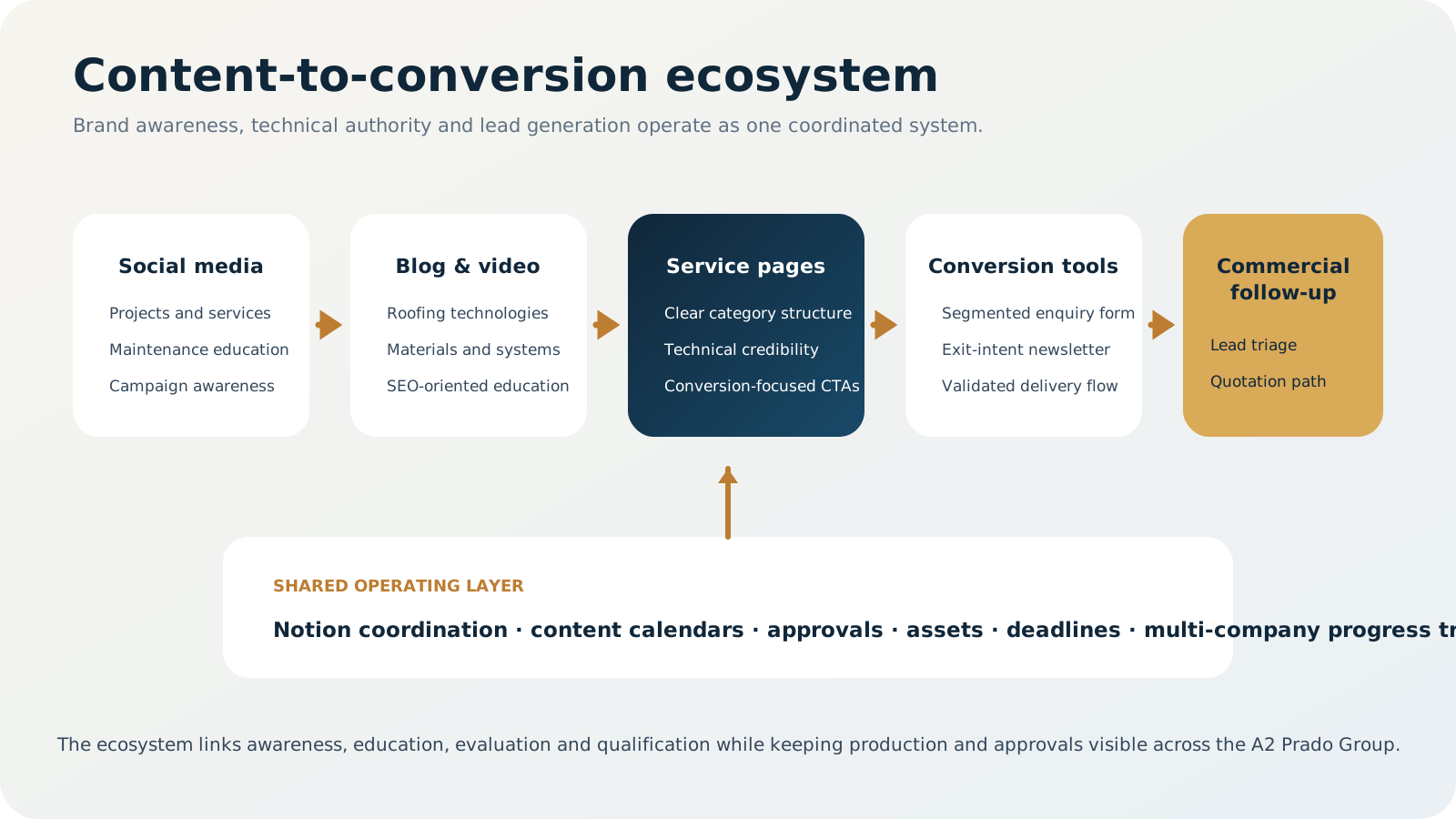
The resulting platform gives Master Roofs a maintainable and commercially focused presence across website, blog and social channels. Users can identify appropriate services, understand specialist systems and submit more useful project information through one coherent experience.
Consistent structures make a broad roofing and façade offer easier to scan and compare.
Progressive segmentation improves the information available before commercial follow-up.
Reusable components, active content, SEO, maintenance and coordinated social communication support long-term growth.
For specialist construction services, the strongest conversion systems do more than present work. They organise technical knowledge, reduce decision uncertainty and capture the operational context needed for a meaningful commercial response.
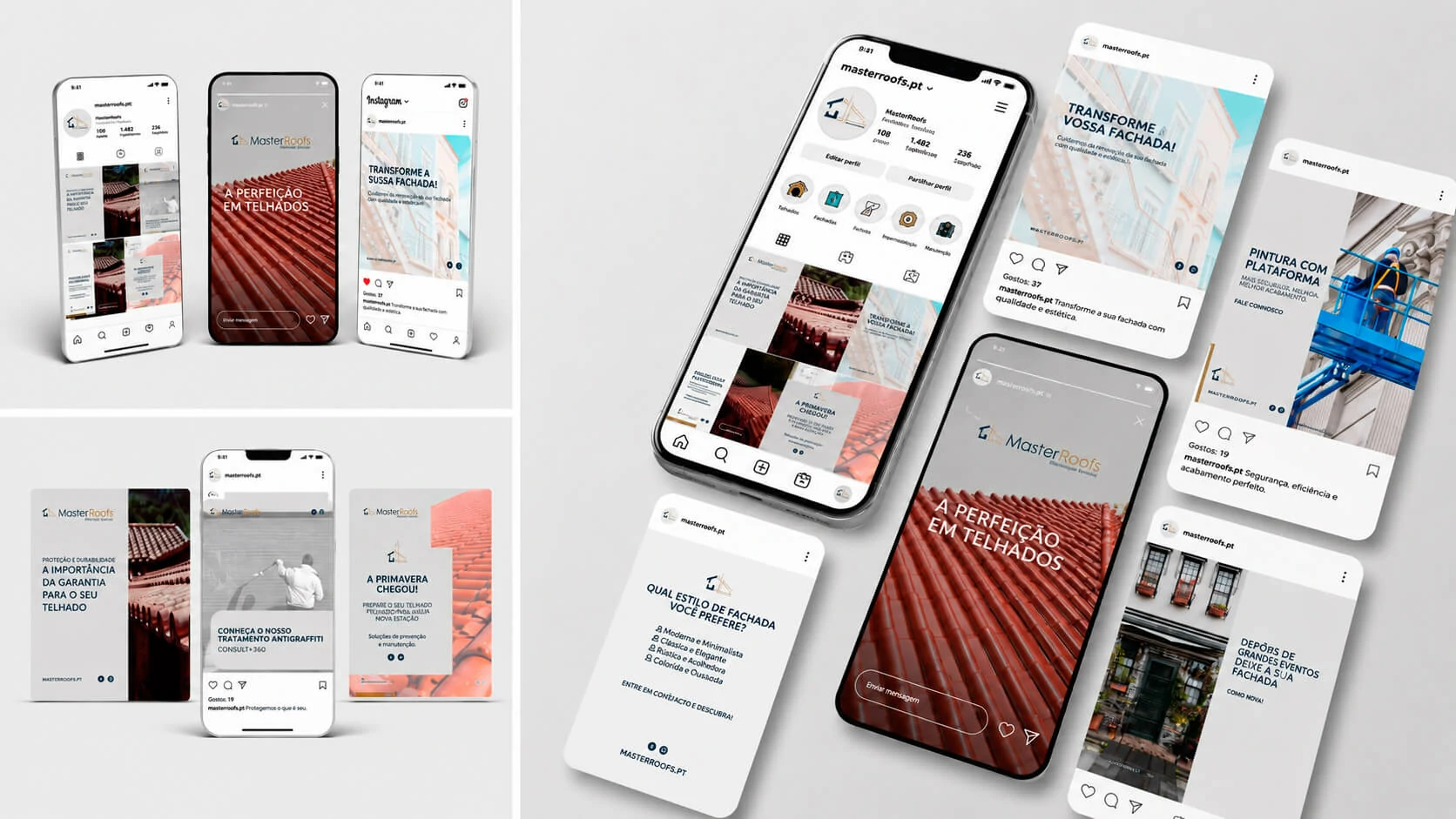
Social communication extends the same service positioning and educational logic beyond the website.
The social-media work includes content planning, editorial calendars, visual production, copywriting, project promotion, service campaigns and educational content about roofing and façade maintenance.
Website, blog and social channels are coordinated so that each platform supports a different stage of the audience journey: social media generates awareness, technical content develops authority and the website converts interest into qualified enquiries.