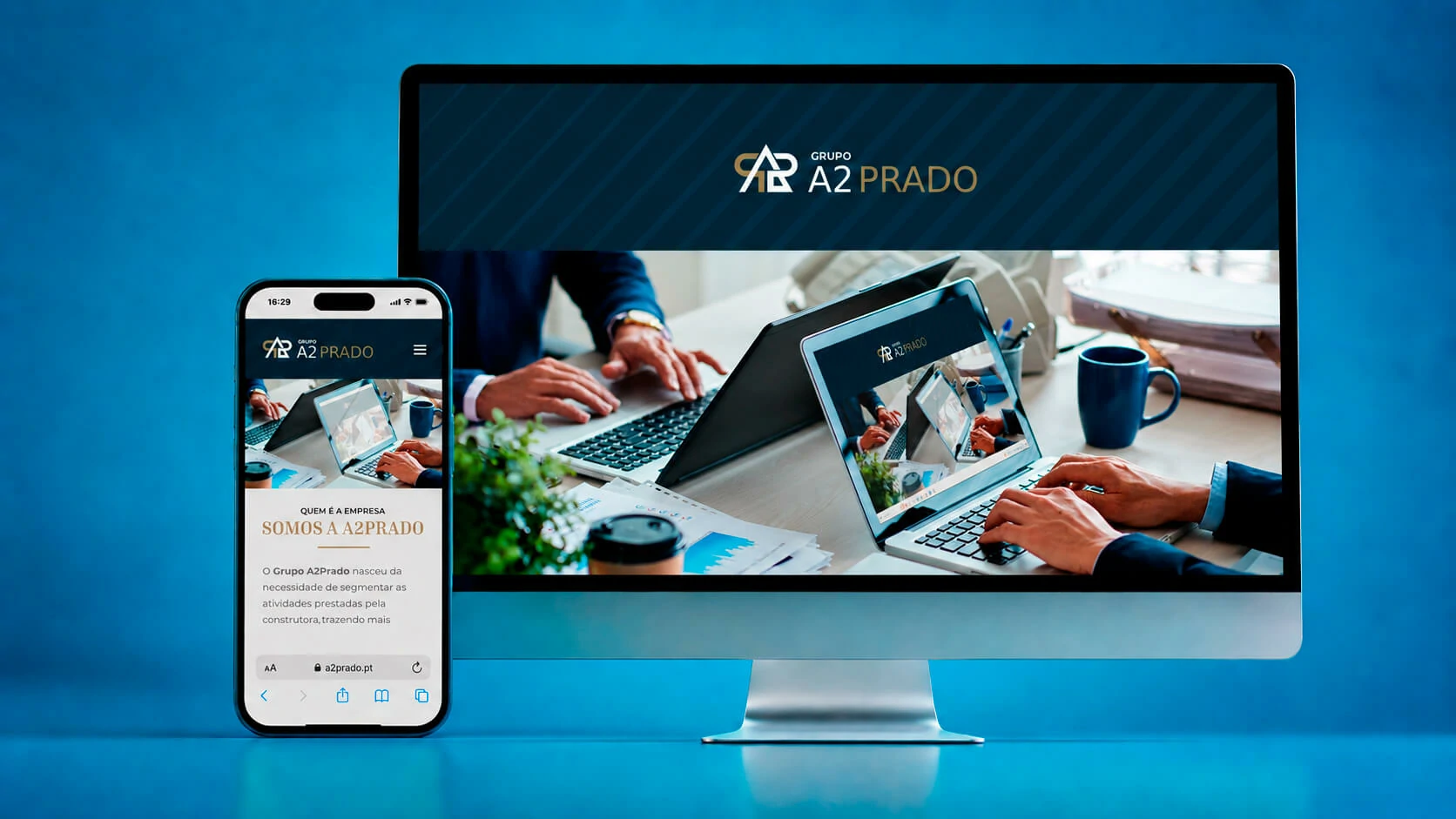
A responsive institutional website designed to present a multidisciplinary construction group through a clear one-page experience, consistent visual hierarchy and reliable technical foundation.
Technical scopeHosting · DNS · Security · Cache · SEO
01 · Project overview
A focused digital presence for a multidisciplinary engineering and architecture group.
A2 Prado needed a professional website capable of presenting the group, its specialist companies and its experience without forcing visitors through a fragmented collection of unrelated services.
The solution was developed directly in WordPress using Divi and a compact one-page structure. The existing logo and visual identity guided the interface, while custom CSS refinements improved spacing, hierarchy and responsive behaviour across desktop, tablet and mobile devices.
The final experience brings together the group overview, specialised brands, leadership, career information, direct contact details and newsletter sign-up within a single, easy-to-follow journey.
ChallengePresent a complex group clearly
Multiple areas and companies needed to feel connected without creating a confusing navigation structure.
SolutionCompact one-page architecture
Each section answers a specific user question and moves naturally toward contact or exploration of the group brands.
FoundationVisual consistency and technical reliability
The interface, infrastructure, security, performance and search foundations were treated as one connected delivery.
02 · My role
From an empty WordPress structure to a configured and responsive live website.
My contribution covered the complete digital implementation: content organisation, interface construction in Divi, responsive refinement through custom CSS and the technical setup required to publish and maintain the project.
UX/UI and content hierarchy
Structured the one-page journey and organised the group information into clear, readable sections.
Section hierarchy
Navigation logic
Visual consistency
Clear contact pathways
WordPress and Divi build
Implemented the interface directly in the browser, combining Divi components with custom CSS adjustments.
One-page construction
Responsive CSS refinement
Layout adaptation
Occasional code editing
Infrastructure and publishing
Prepared the environment required to move the website from development into a secure live configuration.
Hosting evaluation
cPanel and database setup
DNS and HTTPS configuration
Email and production checks
Performance and visibility
Configured the essential foundations for security, caching, newsletter capture and search accessibility.
Security hardening
Cache configuration
SEO foundations
Indexation and metadata
03 · Design approach
A practical design-in-browser workflow connecting structure, interface and implementation.
The project evolved directly inside WordPress rather than through a separate high-fidelity prototype. Content priorities, visual hierarchy and responsive behaviour were refined iteratively during implementation and review.
01
Brand-led interface
The existing identity established the colour, typography and visual tone used throughout the website.
02
Direct implementation
Design decisions were tested in the real browser environment, reducing the distance between concept and final behaviour.
03
Responsive refinement
Custom CSS was used to correct spacing, proportions and component behaviour across different screen sizes.
04
Documented structure
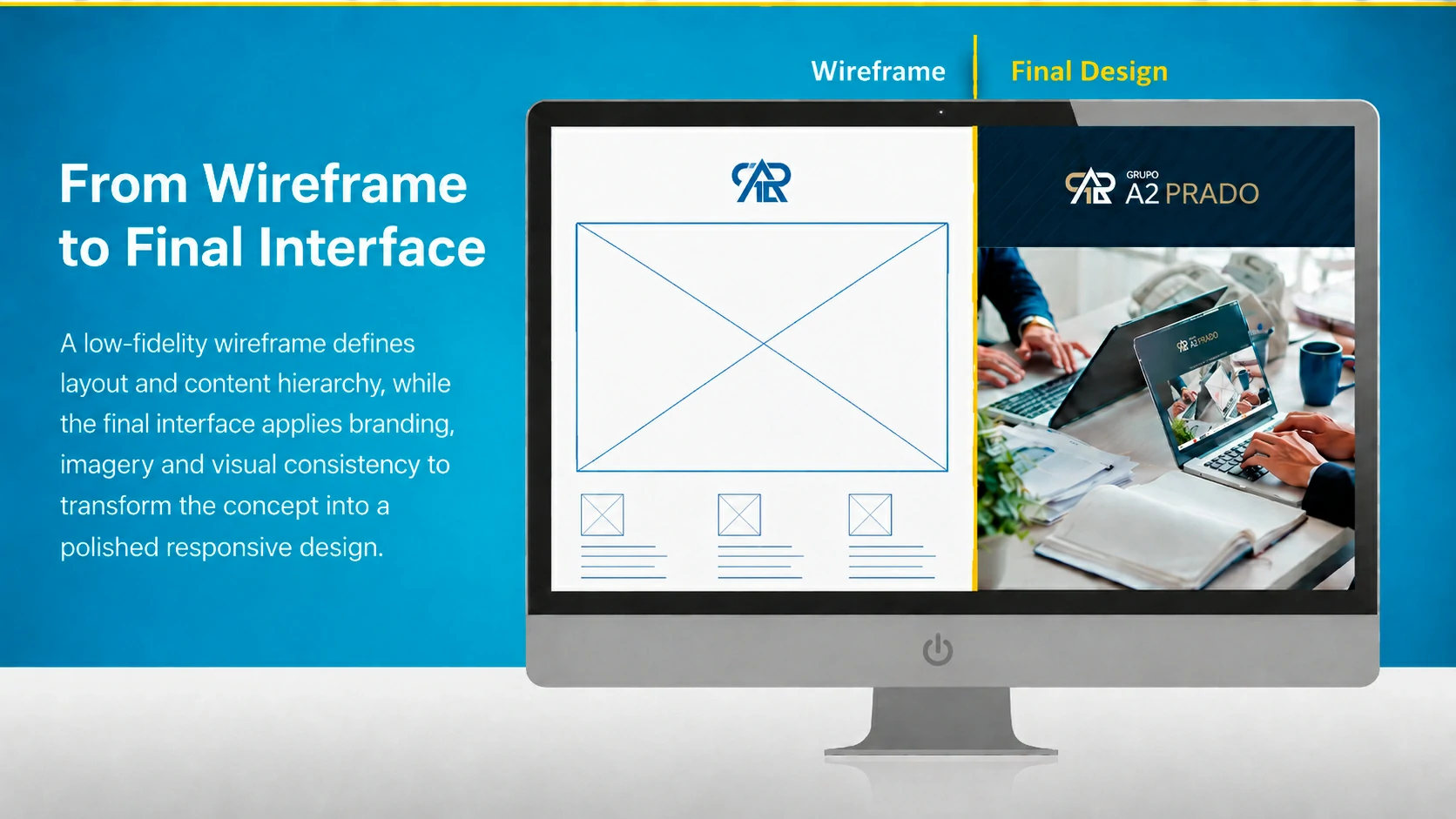
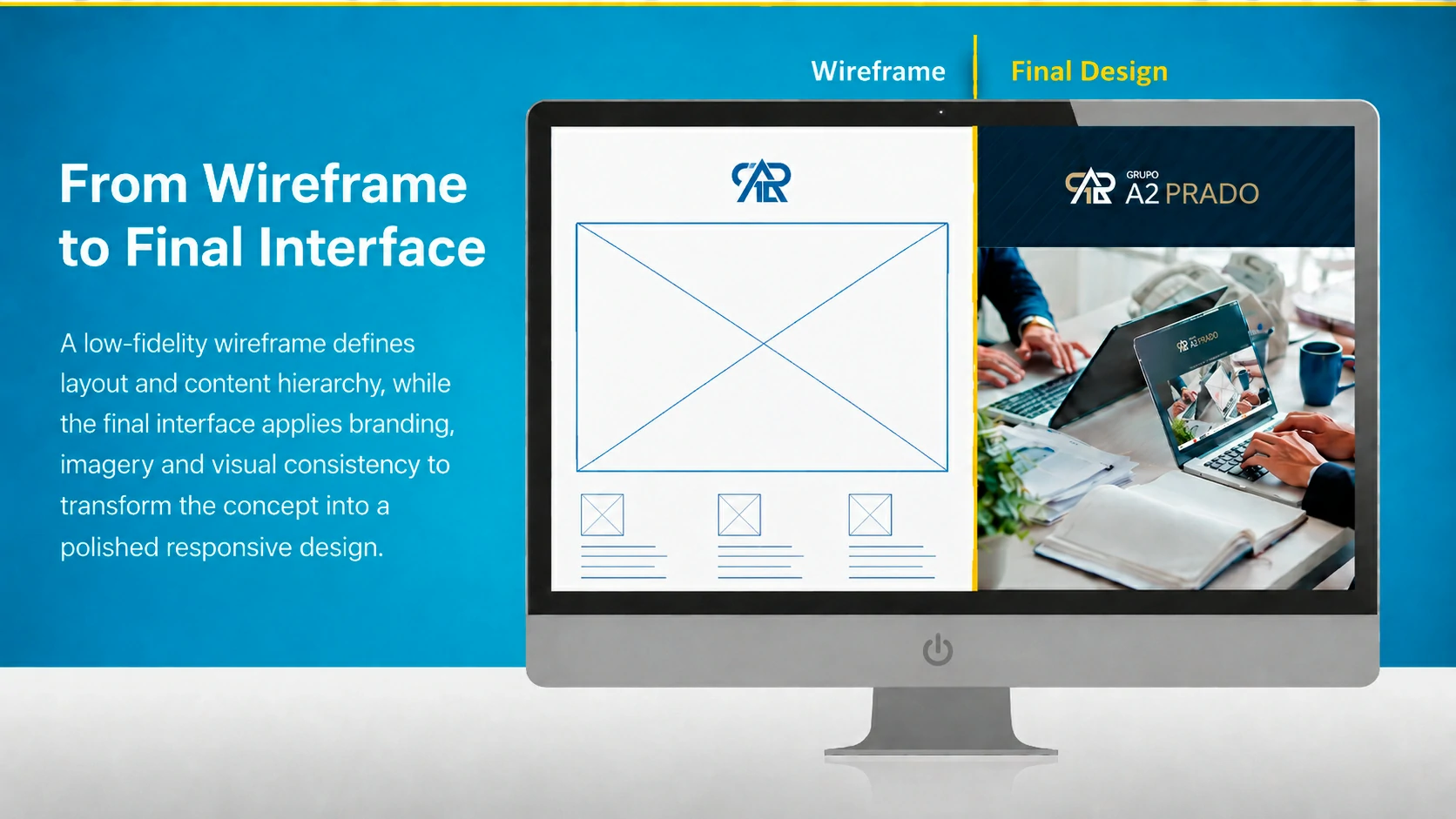
Wireframe-style documentation was created to explain the hierarchy and design reasoning behind the implemented experience.
04 · Information architecture
A short vertical journey that explains the group before asking the visitor to act.
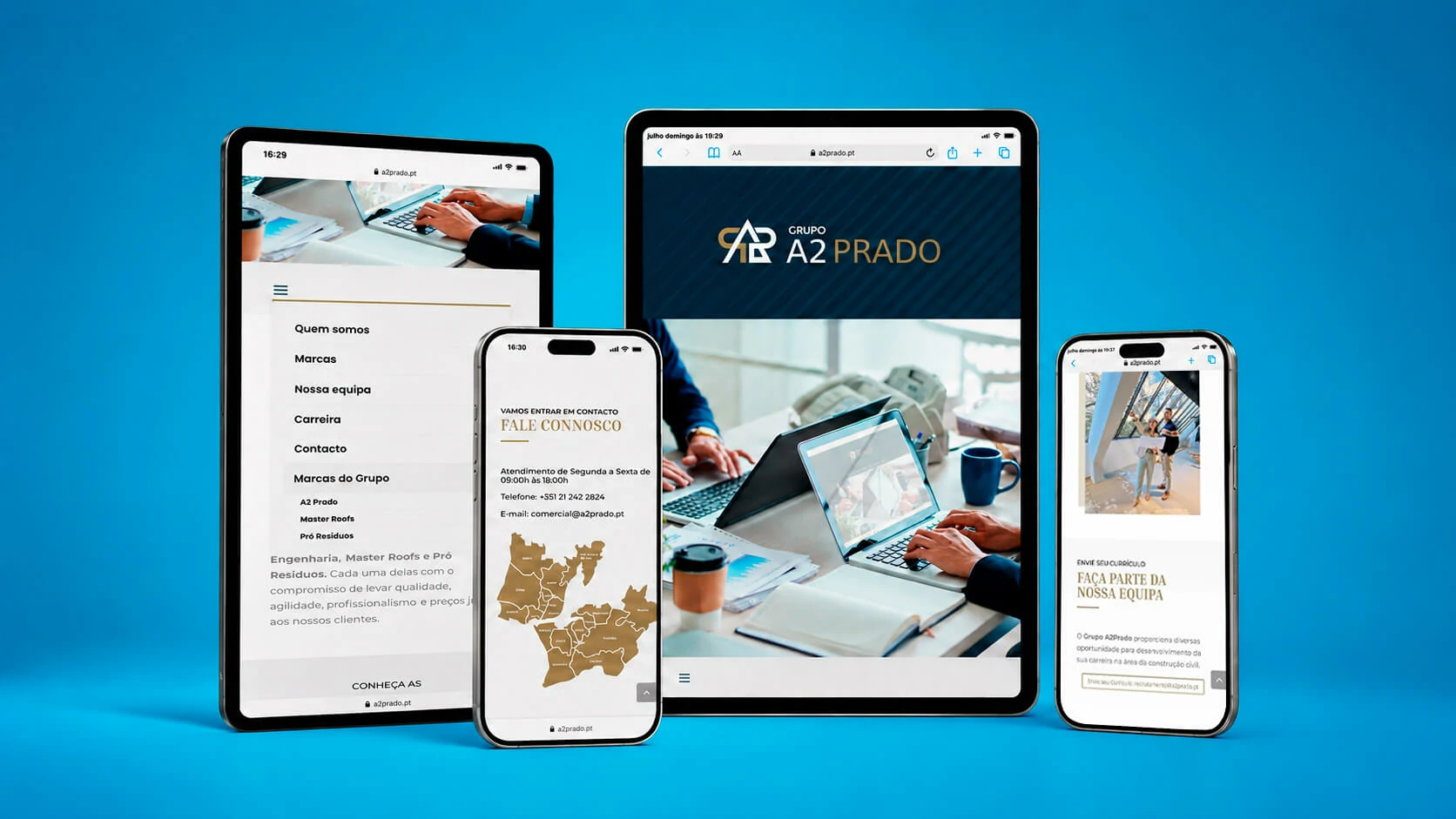
The one-page structure avoids unnecessary navigation layers. Visitors first understand the group, then discover its specialised brands, leadership, career opportunities and direct contact information.
01Brand recognition
The opening section introduces the group through its identity and institutional positioning.
02Group overview
A concise explanation clarifies the relationship between engineering, architecture and the wider business structure.
03Specialised companies
The group brands are presented as connected solutions rather than disconnected services.
04People and careers
Leadership and recruitment information strengthen credibility and communicate the human side of the organisation.
05Contact and newsletter
Direct contact details and newsletter capture provide clear next steps without complicating the journey.
05 · Responsive experience
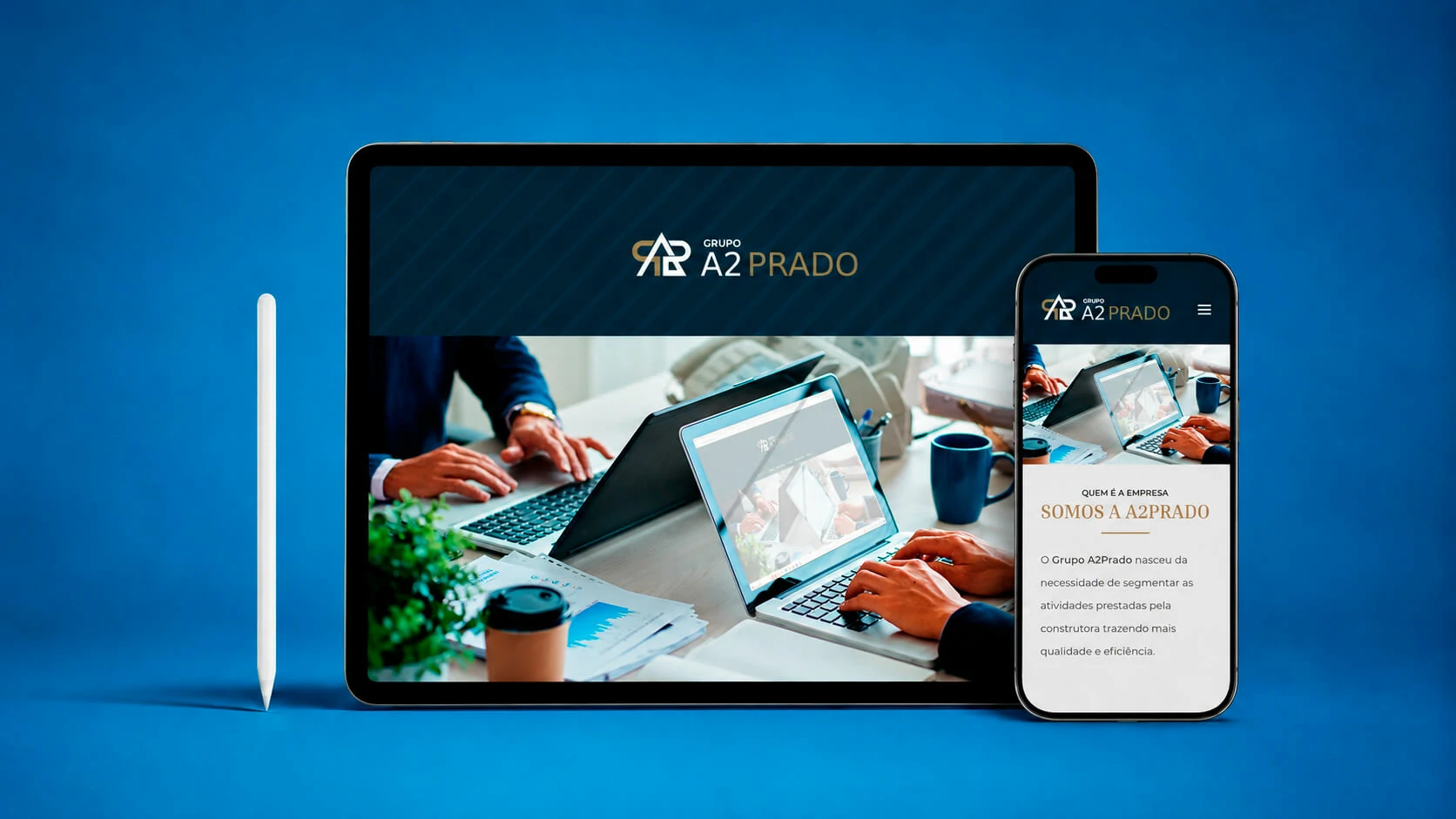
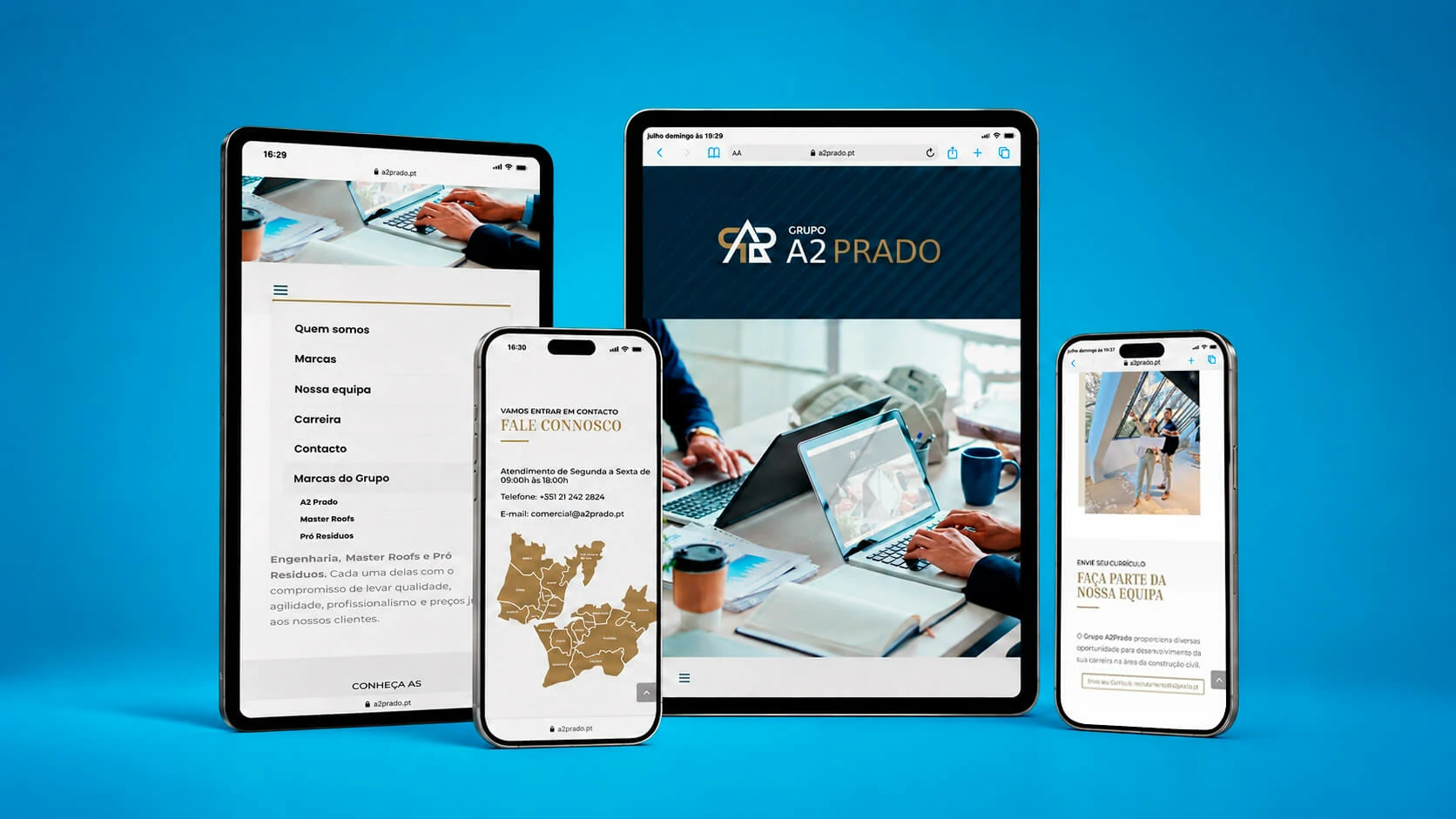
The same institutional story adapted for desktop, tablet and mobile reading.
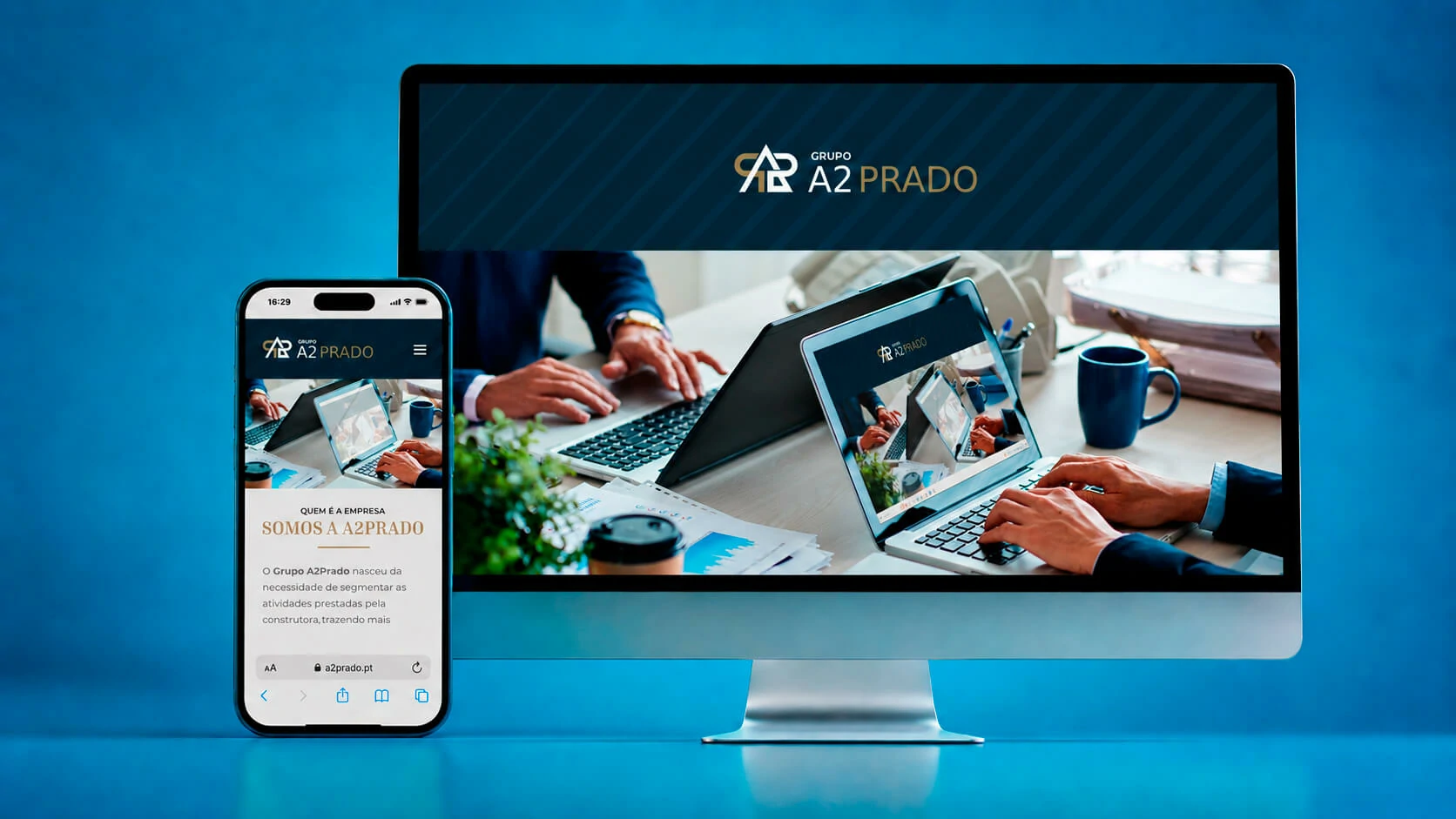
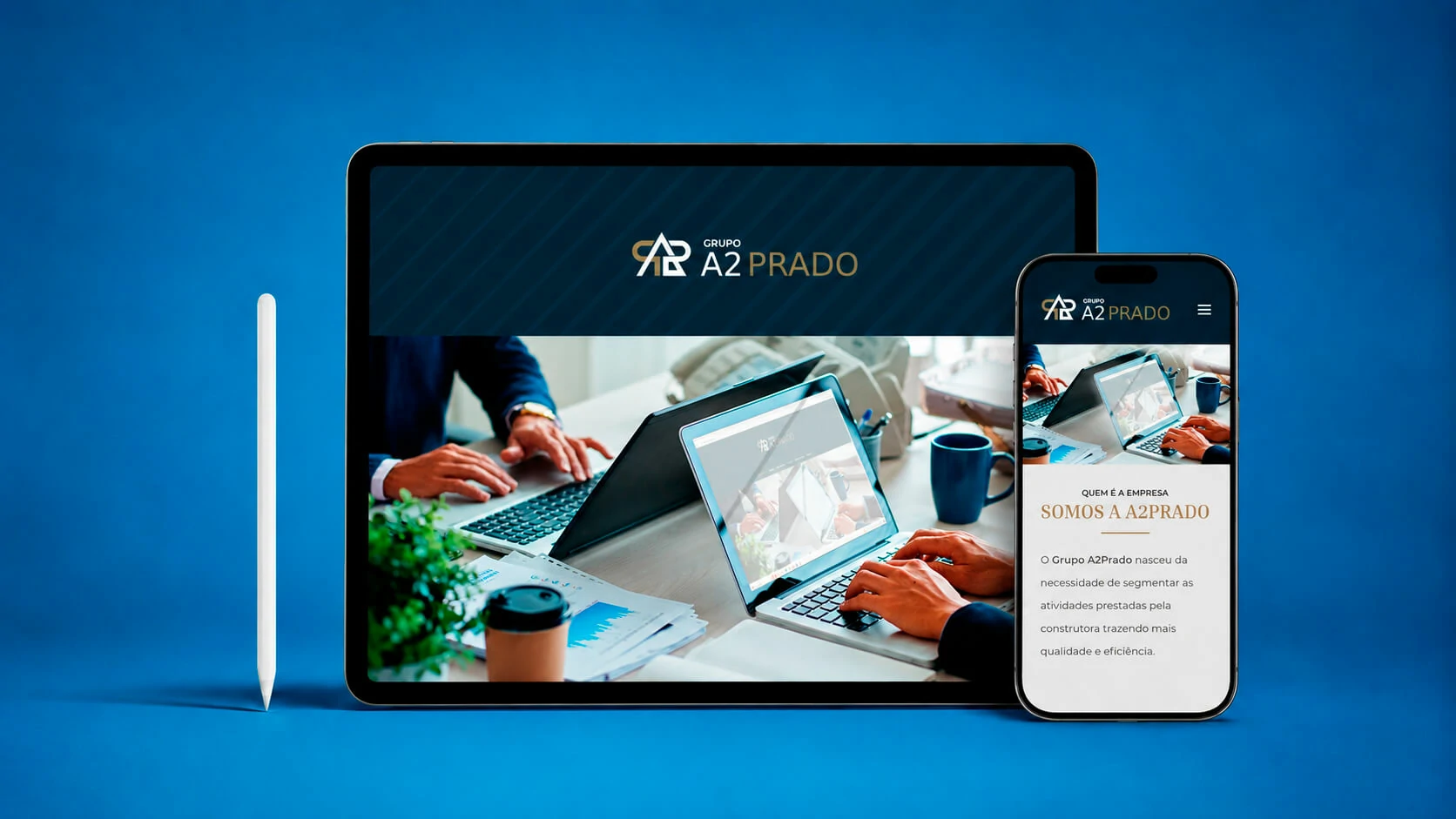
Responsive behaviour was treated as part of the interface rather than a final correction. Navigation, image proportions, text hierarchy and touch targets were refined so the experience would remain coherent across devices.
Responsive principle
Content priority remained consistent across every screen, while layout, spacing and navigation were reorganised to suit each device rather than simply being reduced in size.
06 · Technical delivery
A complete WordPress implementation supported by infrastructure, optimisation and launch preparation.
The project combined front-end implementation with the operational work required to launch a reliable institutional website. WordPress and Divi provided the core environment, while custom CSS and occasional HTML adjustments refined the final result.
WordPressContent management and website foundationDiviOne-page construction and reusable interface componentsCustom CSSResponsive corrections, spacing and visual refinementHTML adjustmentsOccasional code editing for interface and tracking needscPanel + MySQLHosting environment, database and production configurationDNS + HTTPSDomain connection and secure publishingSecurity + cacheProtection, performance and maintenance foundationsSEO foundationsMetadata, image optimisation, indexation and accessible structure
Accurate positioning
WordPress and Divi implementation with custom CSS, responsive refinement, hosting setup, security, caching, SEO configuration and occasional code editing.
07 · Full project gallery
Explore the design process and the final responsive presentations.
The gallery brings together the transition from wireframe logic to final interface and the main desktop, tablet and mobile compositions created for the case study.
08 · Outcome and learning
A clearer institutional presence supported by a maintainable digital foundation.
The result is a focused one-page website that presents the A2 Prado group, its specialised companies, leadership, career opportunities and contact information in a coherent and professional way.
Clearer group positioning
The structure explains a multidisciplinary business without overwhelming visitors with disconnected service pages.
Consistent responsive experience
The same information remains readable, visually coherent and actionable across desktop, tablet and mobile devices.
Reliable technical delivery
Hosting, security, caching, SEO and production configuration support the interface beyond its visual presentation.